What You Need to Know About Skills Cards for Site Access
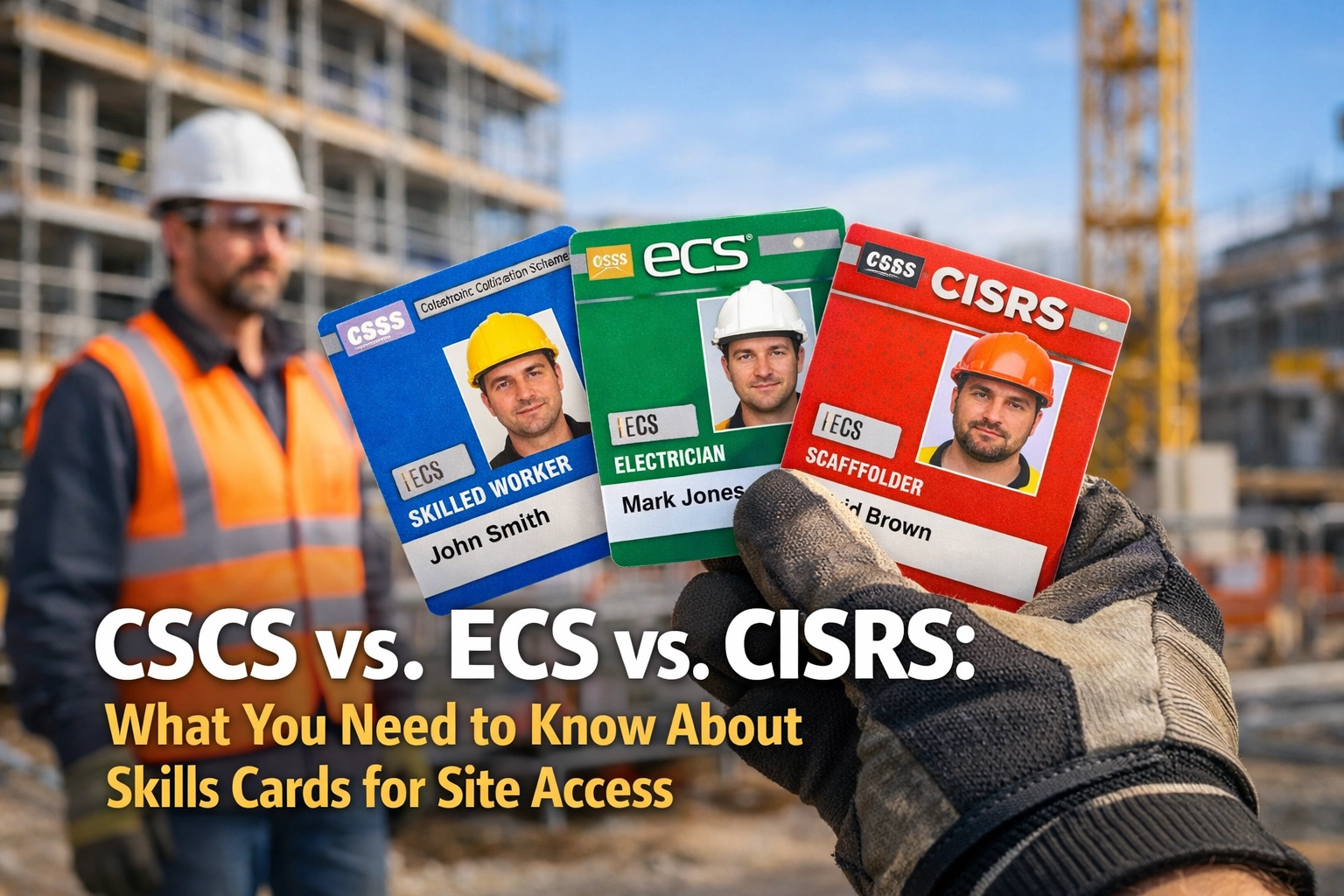
You've got a project starting Monday. Your contractor turns up at the gate, card in hand, ready to work. Then site security turns them away. Wrong card. Wrong qualification. Wrong day to find out.
This happens more often than you'd think. Skills cards aren't interchangeable: and getting it wrong costs time, money, and credibility. Whether you're managing industrial services recruitment in the UK or sourcing specialist industrial cleaning recruitment, understanding the difference between CSCS, ECS, and CISRS cards isn't optional anymore.
Let's break down what each card actually means, why they're not the same, and how to avoid the gate-turn-away scenario.
What Actually Are Skills Cards?
Skills cards prove that workers hold the right qualifications and health and safety knowledge for their trade. They're the construction industry's way of standardising competence across sites.
But here's where it gets messy: different trades need different cards. A general construction card won't cut it for electrical work. An electrician's card won't help a scaffolder get on site. You need the right scheme for the right role.
The three main schemes are:
- CSCS – Construction Skills Certification Scheme
- ECS – Electrotechnical Certification Scheme
- CISRS – Construction Industry Scaffolders Record Scheme
Each validates different trades, qualifications, and competencies. Let's get into the specifics.
CSCS: The General Construction Card
CSCS is the broadest scheme. It covers most general construction trades, from labourers and bricklayers to site managers and demolition operatives.
Who needs it:
- Groundworkers
- Carpenters and joiners
- Plasterers
- Roofers
- Plant operatives
- Site supervisors and managers
What it proves:
- Health, safety, and environment knowledge (via the CITB test)
- Trade-specific qualifications (NVQ/SVQ levels depend on the card type)
- Basic competence for on-site work
Card colours matter:
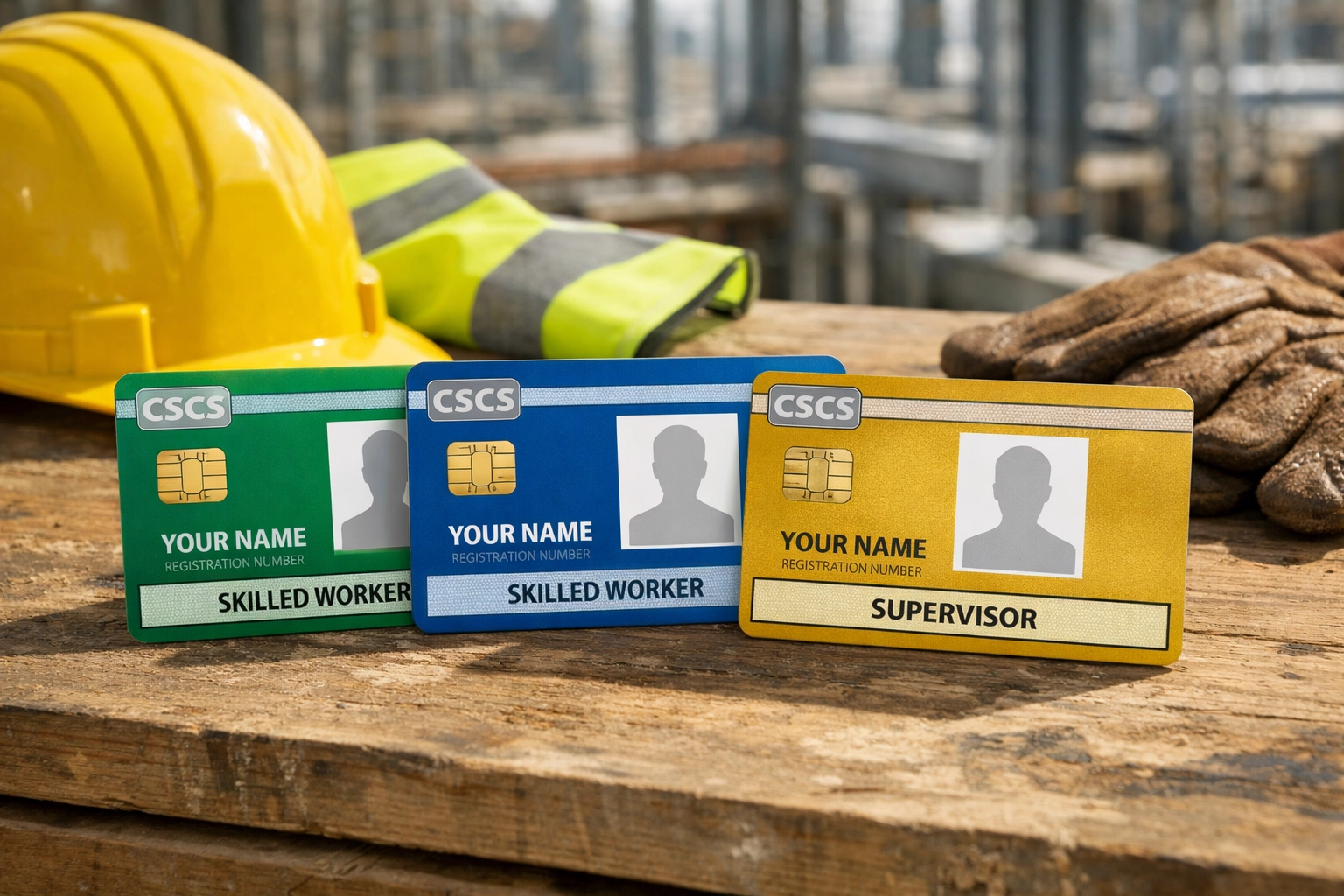
CSCS cards come in different colours, each representing different qualification levels:
- Green (Labourer) – Entry-level, typically for operatives with minimal qualifications
- Blue (Skilled Worker) – Requires NVQ Level 2 or equivalent
- Gold (Advanced Craft) – Requires NVQ Level 3
- Black (Manager) – For supervisory or management roles with relevant qualifications
- White (Related Occupations) – For professionals like architects or surveyors
Validity:
Five years. After that, cardholders need to retest and renew.
Common misconception:
Just because someone has a CSCS card doesn't mean they're qualified for specialised work. A blue CSCS card for carpentry doesn't validate electrical competence or scaffolding expertise.
ECS: The Electrotechnical Specialist Card
ECS is a CSCS partner scheme, but it's specifically for electrotechnical workers. If you're hiring electricians, electrical testers, or apprentices in the electrical trade, this is the card they need.
Who needs it:
- Electricians (domestic, commercial, industrial)
- Electrical testers
- Electrical apprentices
- Installation electricians
- Maintenance electricians
What it proves:
- Electrical competence verified through JIB (Joint Industry Board) standards
- Knowledge of BS 7671 Wiring Regulations (for gold cards)
- NVQ Level 3 or equivalent electrical qualifications
- ECS Health, Safety and Environmental Assessment (not the standard CITB test)
Card types:
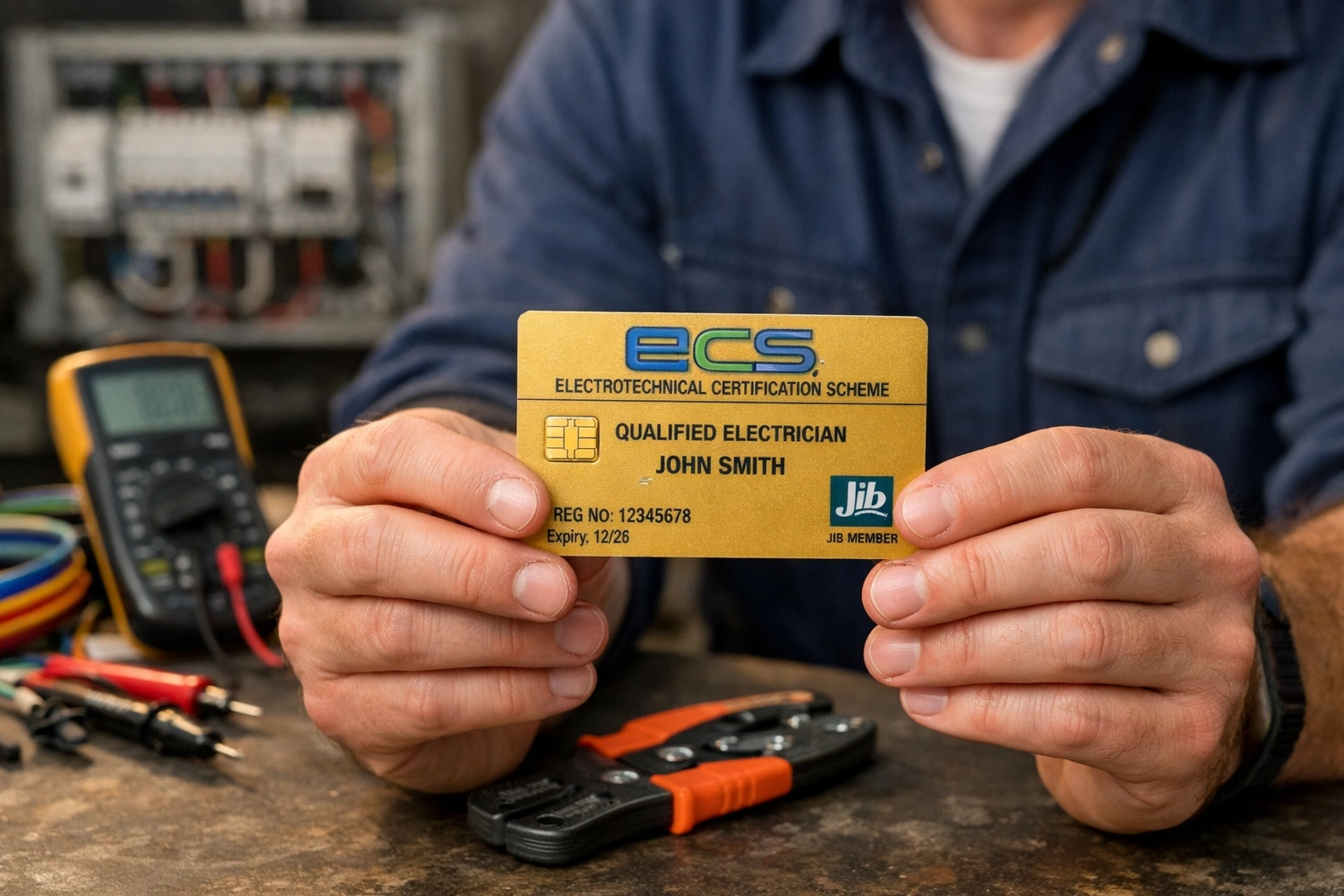
- Gold ECS Card – Fully qualified electricians with NVQ Level 3 and BS 7671 knowledge
- Trainee ECS Card – Electrical apprentices working under supervision
Why CSCS won't work for electricians:
A CSCS card only proves general construction health and safety knowledge. It doesn't validate electrical qualifications or competence. For electrical work, ECS is mandatory. No exceptions.
Validity:
Five years, same as CSCS.
CISRS: The Scaffolding Specialist Card
CISRS is the Construction Industry Scaffolders Record Scheme. It's the gold standard for scaffolders and anyone working at height with scaffold structures.
Who needs it:
- Scaffolders
- Advanced scaffolders
- Scaffold supervisors
- Scaffold inspectors
- Trainee scaffolders
What it proves:
- Scaffold-specific training and qualifications
- CISRS certification (Part 1 and Part 2 training for scaffolders)
- Health and safety knowledge for working at height
- Competence in erecting, altering, and dismantling scaffolding safely
Card types:
- Trainee (Red) – For trainees undergoing CISRS Part 1 training
- Scaffolder (Green) – Qualified scaffolders with CISRS Part 1 and Part 2
- Advanced Scaffolder (Blue) – Experienced scaffolders with additional qualifications
- Supervisor (Gold) – For those managing scaffold teams
Why it matters:
Scaffolding is high-risk. Poorly erected scaffolding causes serious injuries and fatalities every year. CISRS certification ensures workers understand load calculations, tie patterns, and safe working practices.
Validity:
Five years, though some roles require regular reassessment and site-specific training.
Common Mistakes That Cost Time and Money
1. Assuming all cards are interchangeable
They're not. An electrician with a CSCS card instead of ECS will be turned away. A scaffolder without CISRS won't be allowed to touch the structure.
2. Not checking card validity
Cards expire. If a contractor's card ran out last month, they're not getting on site. Always check expiry dates before mobilisation.
3. Ignoring the Building Safety Act requirements
Post-Grenfell, competence requirements have tightened. Skills cards alone aren't always enough: proof of ongoing CPD (Continuous Professional Development) and specific training may also be required.
4. Accepting the wrong card colour
A green CSCS card might get someone on site as a labourer, but it won't validate them for skilled trades. Match the card colour to the role.
5. Not verifying authenticity
Fake cards exist. Always verify cards through the official CSCS, ECS, or CISRS databases.
Why Proper Vetting Matters More Than Ever
Compliance isn't a nice-to-have. It's a legal requirement. Under CDM Regulations 2015, principal contractors must ensure everyone on site is competent. That means checking:
- Skills cards are valid and appropriate
- Qualifications match the role
- Health and safety knowledge is up to date
- Workers have the right certifications for the task
Get it wrong, and you're looking at:
- HSE enforcement action
- Project delays
- Reputational damage
- Potential prosecution
For industrial services recruitment in the UK and specialist industrial cleaning recruitment, where compliance standards are high, vetting can't be an afterthought.
How Alpha Jobs Handles Skills Card Vetting
We've been doing this for over 18 years. We know what cards mean what, which qualifications matter, and how to spot the red flags.
Our vetting process includes:
- Verifying all skills cards through official databases
- Checking expiry dates and qualification levels
- Matching card types to specific roles and site requirements
- Validating supporting certifications (CSCS, ECS, CISRS, CSCS Supervisor, IPAF, PASMA, etc.)
- Ensuring compliance with Building Safety Act and CDM 2015 standards
Why it matters:
You don't have time to become an expert on every certification scheme. We already are. Our ISO 9001:2015 accreditation and TICA membership mean we meet internationally recognised quality standards: and we're held accountable for it.

When you work with us, you're not just getting contractors. You're getting pre-vetted, compliant, and job-ready workers who won't be turned away at the gate.
Final Thoughts
Skills cards aren't just plastic. They're proof of competence, compliance, and safety. But only if you've got the right one.
- CSCS for general construction trades
- ECS for electrotechnical work
- CISRS for scaffolding
Get it wrong, and you're looking at delays, compliance issues, and unnecessary headaches. Get it right, and your project runs smoothly from day one.
Need help sourcing the right contractors with the right cards? We've been handling industrial services recruitment across the UK for nearly two decades. We know what to check, what to ask, and how to make sure your team is compliant before they ever step on site.
Get in touch with Alpha Jobs today. Let's make sure your next project starts on the right foot: with the right people, the right cards, and zero surprises at the gate.