Why Specialist Industrial Blasting and Tank Maintenance Teams are Non-Negotiable
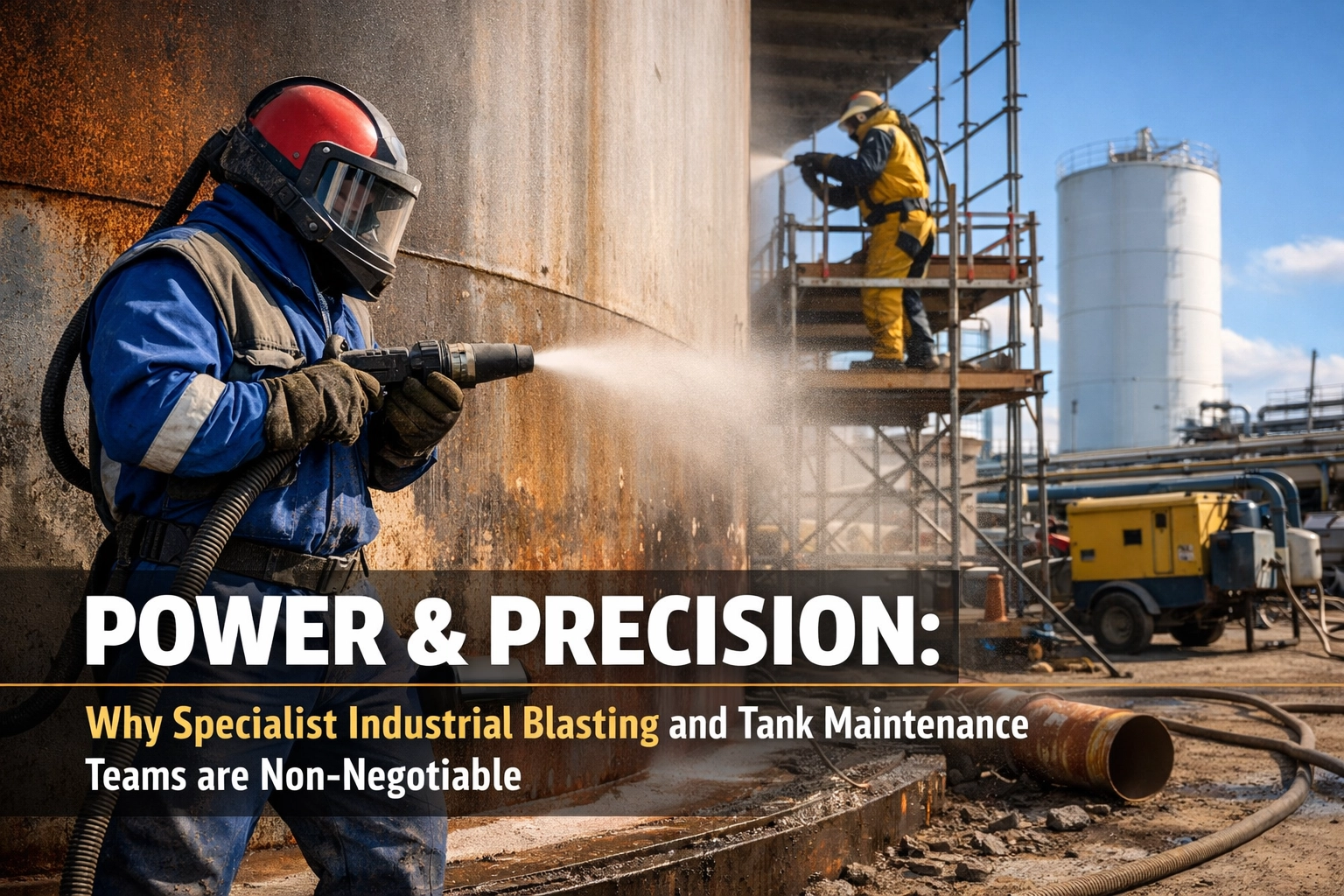
In industrial operations, some jobs don't leave room for trial and error. Industrial blasting, tank maintenance, and specialist industrial cleaning fall squarely in that category. One poorly trained worker, one skipped safety protocol, or one rushed surface prep can cascade into equipment failures, regulatory fines, and production shutdowns that cost tens of thousands per day.
The businesses that understand this don't leave industrial blasting staffing to chance. They work with recruitment specialists who know the difference between someone who's handled a pressure washer and someone who can safely blast a petrochemical tank to ISO 8501 standards.
Why General Maintenance Crews Don't Cut It
Industrial tanks hold acids, petroleum products, chemicals, and other hazardous materials. These aren't warehouse storage units you can send in a general maintenance crew to sort out. Tank and boiler maintenance staffing requires personnel with specific training in:
- Confined space entry protocols
- Hazardous material handling
- High-pressure abrasive blasting techniques
- Surface preparation to specified standards
- Protective coating application requirements
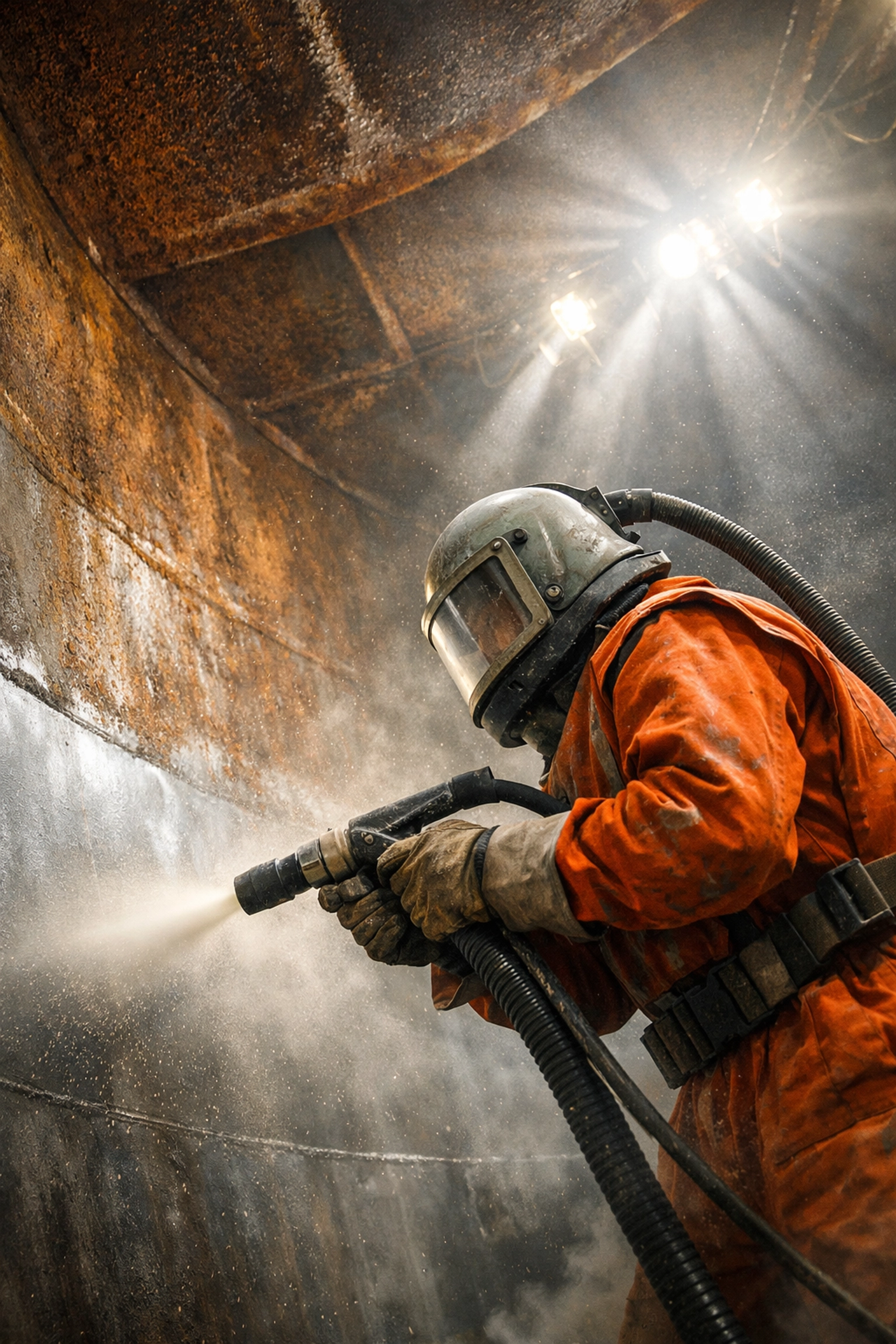
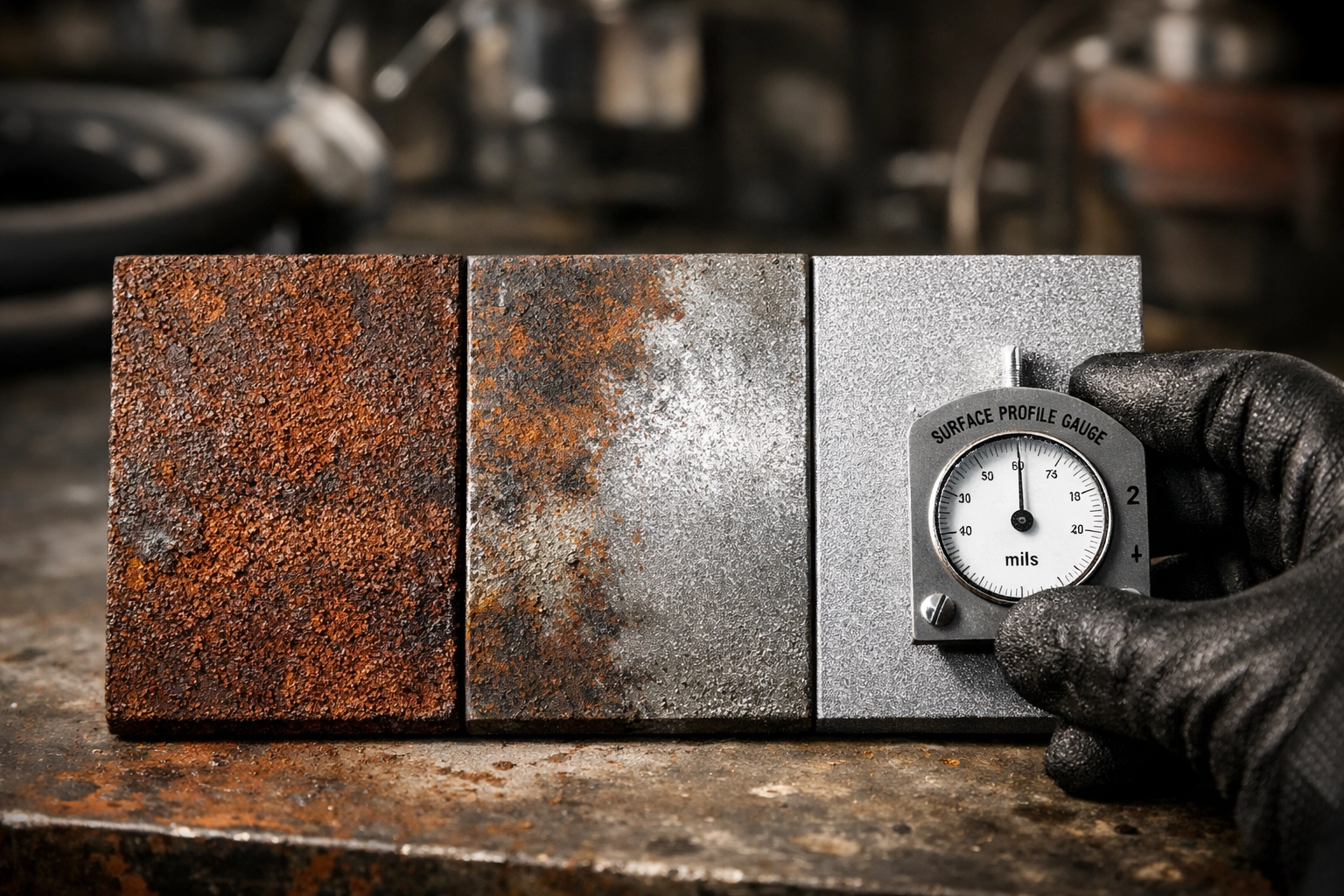
A general maintenance worker may know how to clean. A specialist industrial cleaning operative knows how to blast a tank interior to Sa 2.5 cleanliness, create the correct surface profile for coating adhesion, and do it without damaging the substrate or creating a safety incident.
The technical gap isn't small. It's the difference between a surface that holds a protective coating for 15 years and one that fails within 18 months.
The Real Cost of Getting It Wrong
Businesses often discover the importance of specialist teams after something goes wrong. Common scenarios include:
Premature Coating Failure
Inadequate surface preparation leads to poor coating adhesion. The tank corrodes faster than expected. You're back to square one within two years instead of ten.
Regulatory Non-Compliance
OSHA standards and environmental regulations aren't suggestions. Using unqualified personnel for industrial blasting or tank maintenance creates compliance violations. Fines follow. Operations get shut down pending corrective action.
Production Delays
Contaminated fuel tanks cause equipment failures. Chemical residue in storage tanks compromises product quality. Sludge buildup reduces capacity. Each problem halts production until resolved by specialists who should have been there in the first place.
Safety Incidents
Confined space work without proper training kills workers. High-pressure blasting without correct PPE causes severe injuries. These aren't hypothetical risks: they're documented incidents that happen when businesses cut corners on industrial blasting staffing.
The cost of prevention is measured in thousands. The cost of failure is measured in hundreds of thousands, plus potential legal liability, reputational damage, and operational disruption.
What Specialist Teams Actually Do
Industrial blasting isn't pointing a hose and calling it done. The process requires:
Pre-Work Assessment
Specialist teams evaluate the substrate condition, previous coating systems, contamination levels, and environmental factors. They determine the appropriate abrasive media, blast pressure, and surface profile requirements before starting work.
Proper Abrasive Selection
Different substrates and contamination types require specific abrasive media. Steel grit, copper slag, garnet, glass bead: each has applications where it excels and situations where it's inappropriate. Specialist operatives know which to use when.
Surface Profile Creation
Protective coatings require specific surface profiles to achieve proper adhesion. Too smooth and coatings don't bond. Too rough and coating thickness becomes inconsistent. Specialists create uniform profiles that meet specification requirements.
Contamination Management
Tank interiors contain chemical residues, sludge buildup, and hazardous materials. Specialist industrial cleaning recruitment focuses on operatives trained in proper waste handling, disposal protocols, and environmental protection measures.
Quality Verification
Surface cleanliness standards like ISO 8501 or NACE aren't subjective. Specialist teams use calibrated instruments to verify surface profile depth, contamination levels, and coating readiness before moving to application phases.
Safety & Compliance Aren't Optional
Industrial blasting and tank maintenance involve significant hazards. Specialist teams mitigate these through:
Confined Space Protocols
Tank interiors are confined spaces requiring atmospheric testing, ventilation systems, rescue plans, and trained attendants. These aren't optional safety measures: they're legal requirements that prevent worker deaths.
Respiratory Protection
Abrasive blasting creates airborne particulates. Chemical cleaning generates toxic fumes. Specialist operatives use supplied-air respirators, monitor air quality, and follow exposure limits set by regulatory bodies.
Pressure Safety
High-pressure blasting equipment operates at forces that can cause severe injury. Proper training covers equipment operation, hose integrity checks, dead man switches, and emergency shutdown procedures.
Hazardous Material Handling
Tank residues often contain toxic, corrosive, or flammable materials. Specialist teams hold certifications in hazmat handling and follow documented procedures for containment, neutralization, and disposal.
At Alpha Jobs, our commitment to safety compliance is demonstrated through our ISO 9001:2015 certification, Alcumus SafeContractor approval, and membership in industry bodies like TICA (Thermal Insulation Contractors Association). These aren't marketing badges: they're verification that our processes meet internationally recognized standards for quality and safety management.
The Industrial Blasting Staffing Challenge
Finding qualified operatives for industrial blasting, tank maintenance, and specialist cleaning isn't straightforward. The skills shortage in technical trades affects these sectors particularly hard. Businesses face:
Certification Requirements
Valid CSCS cards, confined space certificates, IPAF/PASMA licenses, and sector-specific qualifications aren't universal among the workforce. Screening candidates requires knowing which certifications matter for specific tasks.
Experience Verification
A CV claiming "industrial cleaning experience" could mean anything from sweeping factory floors to decontaminating nuclear facilities. Specialist industrial cleaning recruitment demands rigorous verification of actual hands-on experience.
Compliance Documentation
Right to work checks, DBS screening where required, safety induction records, and competency assessments create administrative burden. Getting this wrong creates legal exposure.
Short-Notice Requirements
Maintenance shutdowns don't wait for convenient recruitment timelines. When a petrochemical plant schedules a two-week turnaround, you need qualified blasting crews mobilized within days, not months.
This is where 18+ years of recruitment specialization makes the difference. At Alpha Jobs, we maintain databases of pre-vetted operatives across industrial sectors. When you need tank and boiler maintenance staffing, you're not starting from scratch: you're accessing a pool of candidates we've already screened, reference-checked, and compliance-verified.
Why Specialist Recruitment Partners Matter
General recruitment agencies don't understand the nuances of industrial blasting staffing. They can't differentiate between surface preparation standards. They don't know which certifications are mandatory versus nice-to-have. They can't verify whether a candidate actually has the technical competence they claim.
Specialist recruitment in industrial services requires:
- Understanding of technical specifications and industry standards
- Networks within niche industrial trades
- Compliance expertise across safety and employment regulations
- Speed of deployment for shutdown and turnaround projects
- Quality assurance processes that verify competency, not just qualifications
We don't just send CVs. We provide operatives who turn up on site with current certifications, relevant experience, and the competence to work safely and effectively from day one.
The Bottom Line
Industrial blasting, tank maintenance, and specialist cleaning aren't areas where "good enough" suffices. The technical requirements are specific. The safety risks are significant. The compliance obligations are non-negotiable.
Businesses that treat these as commoditized services pay for that mistake through equipment failures, safety incidents, regulatory penalties, and production delays. Those that recognize the value of specialist teams: and specialist recruitment partners who can supply them: avoid these costly problems.
If your operations involve tank and boiler maintenance staffing, industrial blasting requirements, or specialist industrial cleaning recruitment, the question isn't whether you need qualified teams. It's whether you have access to the right people when you need them.
Alpha Jobs has spent nearly two decades building those networks. Our candidates are vetted. Our processes are compliant. Our understanding of industrial sectors is proven through hundreds of successful placements.
When precision and safety aren't negotiable, neither is your recruitment partner. Get in touch to discuss your industrial staffing requirements.