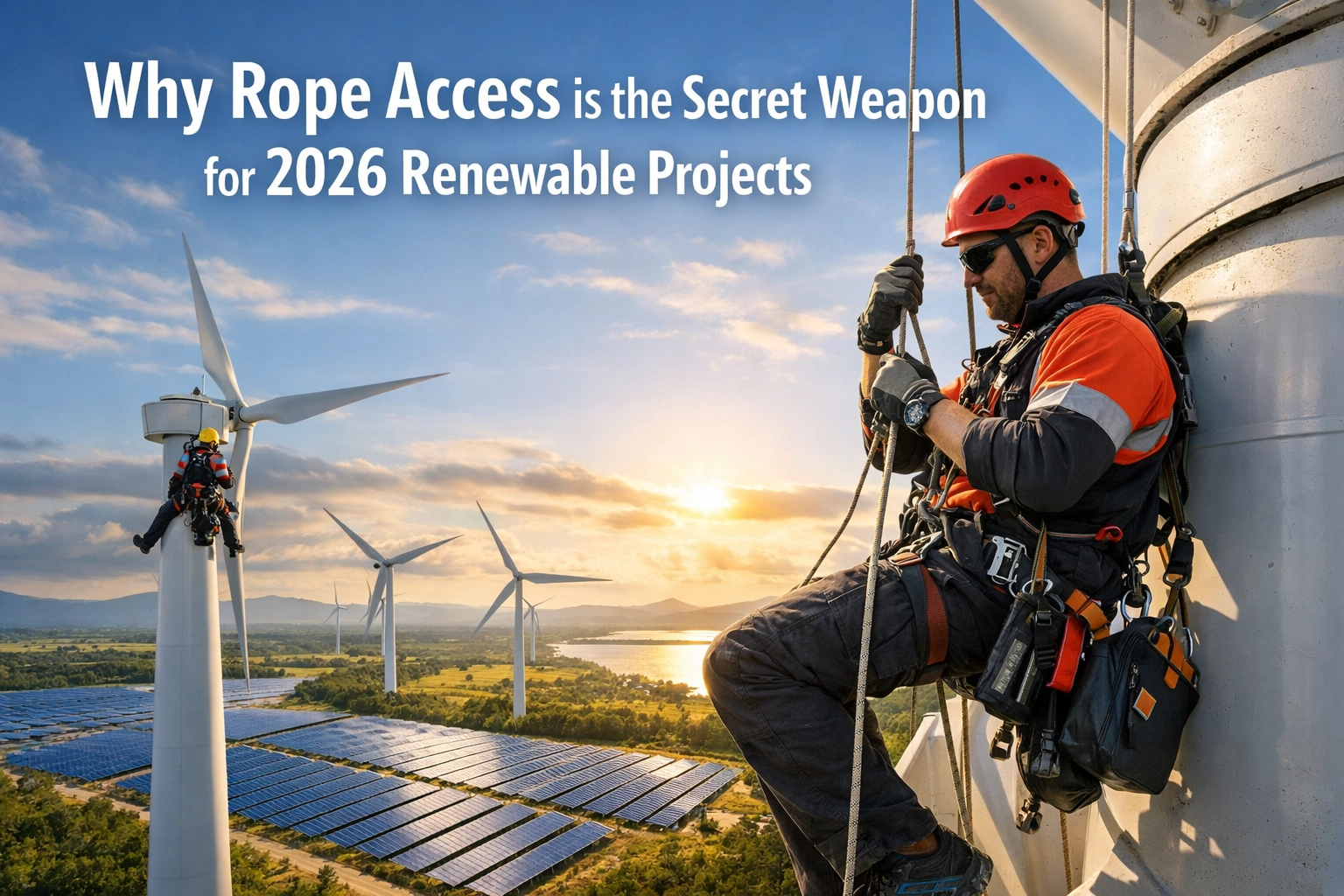
The UK renewable energy sector is accelerating. Fast.
Offshore wind capacity continues to expand. Commercial solar installations are scaling across industrial rooftops nationwide. And with that growth comes a maintenance challenge most energy firms didn't see coming: how do you access, inspect, and repair renewable infrastructure efficiently without grinding operations to a halt?
Traditional methods: scaffolding, cranes, heavy machinery: are slow, expensive, and disruptive. Rope access is proving to be the solution that's faster, safer, and significantly more cost-effective.
The UK Offshore Wind Boom Demands Specialist Access
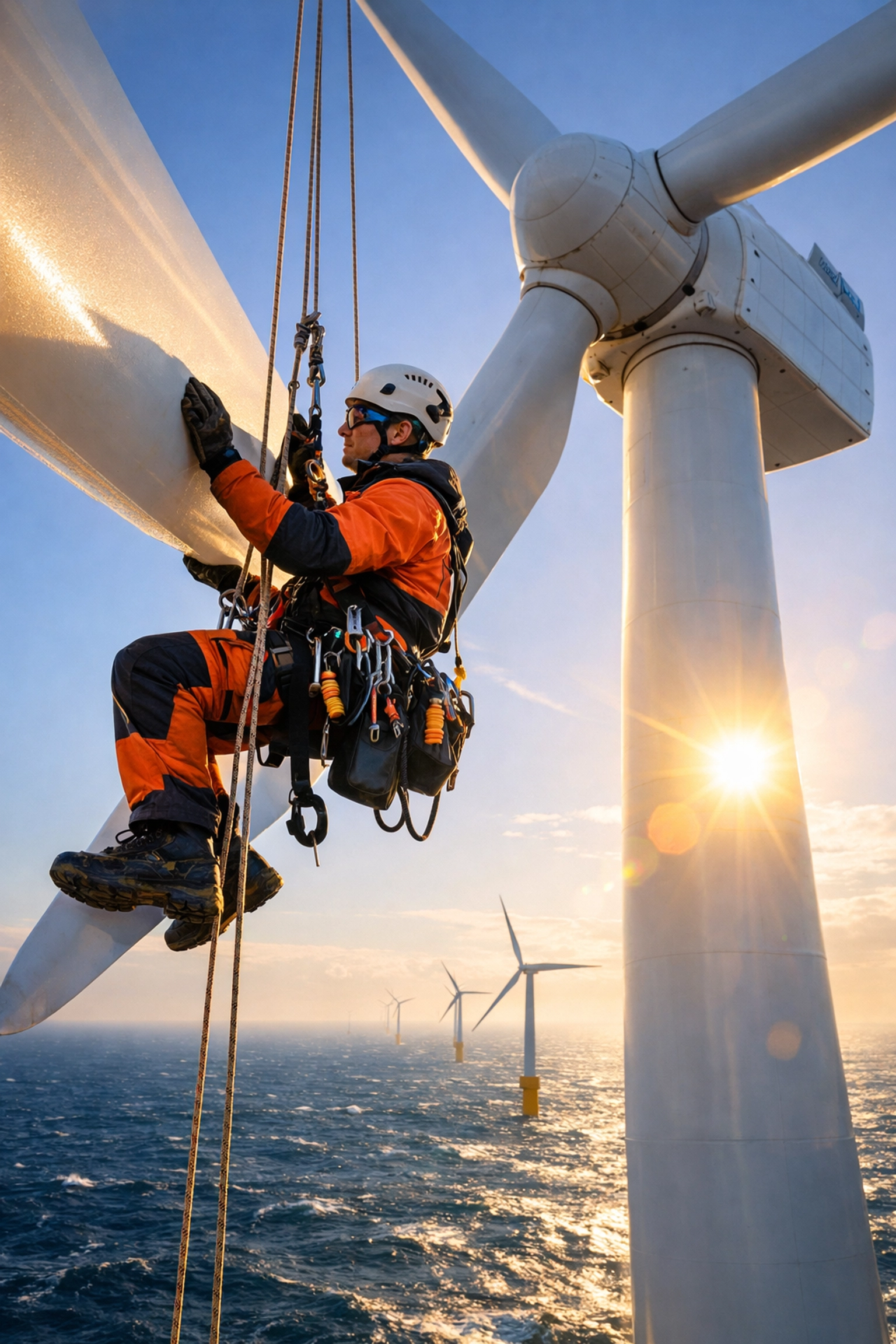
The UK leads Europe in offshore wind capacity. By 2030, the sector is projected to maintain over 40 GW of installed capacity. That's thousands of turbines requiring regular blade inspections, repairs, and preventative maintenance.
Turbine blades operate at extreme heights in harsh marine environments. Access is challenging. Downtime is expensive. Every hour a turbine sits idle costs money.
Rope access technicians can:
- Begin work within hours, not days or weeks
- Perform simultaneous inspections at different heights
- Access remote locations that cranes and platforms can't reach
- Operate in weather conditions that ground traditional equipment
Case studies show a 20% increase in turbine performance efficiency when rope access enables timely inspections and repairs. That's not marginal. That's bottom-line impact.
Commercial Solar PV: The Rooftop Challenge
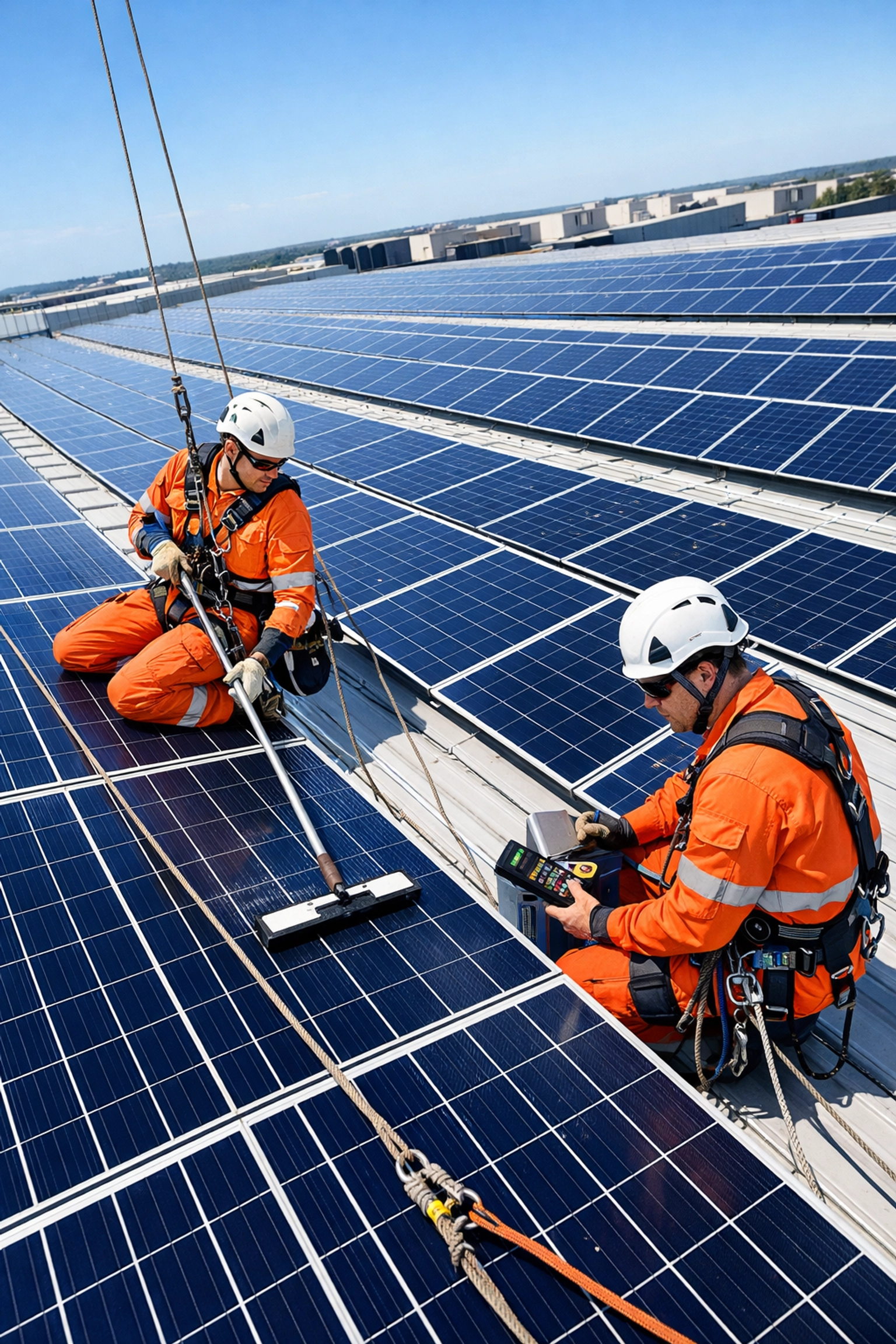
Industrial and commercial rooftops across the UK are becoming solar farms. Warehouses, distribution centers, manufacturing plants: all installing large-scale PV arrays to meet sustainability targets and reduce energy costs.
But solar panels need maintenance:
- Cleaning to maintain efficiency
- Electrical inspections
- Panel replacements
- Inverter servicing
Installing scaffolding for routine maintenance on a 50,000-square-foot industrial roof is impractical. Cranes disrupt operations. Mobile platforms have limitations.
Rope access provides:
- Minimal setup time (hours vs. days)
- No operational disruption to the building below
- Safe access to awkward angles and roof edges
- Lower site footprint
For facilities managers and specialist contractors, rope access is the difference between a two-week maintenance shutdown and a two-day operation.
Cost and Efficiency: The Numbers Don't Lie
Rope access delivers measurable financial advantages over traditional methods.
Cost reductions:
- Overall project costs down by up to 30%
- Labor expenses reduced by up to 50%
- Minimal equipment transport and setup fees
Efficiency gains:
- Setup completed in hours instead of days
- Fewer personnel required on-site
- Work can begin immediately
- Reduced downtime for energy production assets
For a typical offshore wind farm, every day of turbine downtime represents tens of thousands in lost revenue. Rope access minimizes that window.
For commercial solar installations, faster maintenance cycles mean better ROI on the solar investment itself.
The math is straightforward: faster access, fewer people, lower costs, less disruption.
The IRATA-Certified Skills Gap
Here's the problem: demand for rope access technicians is outpacing supply.
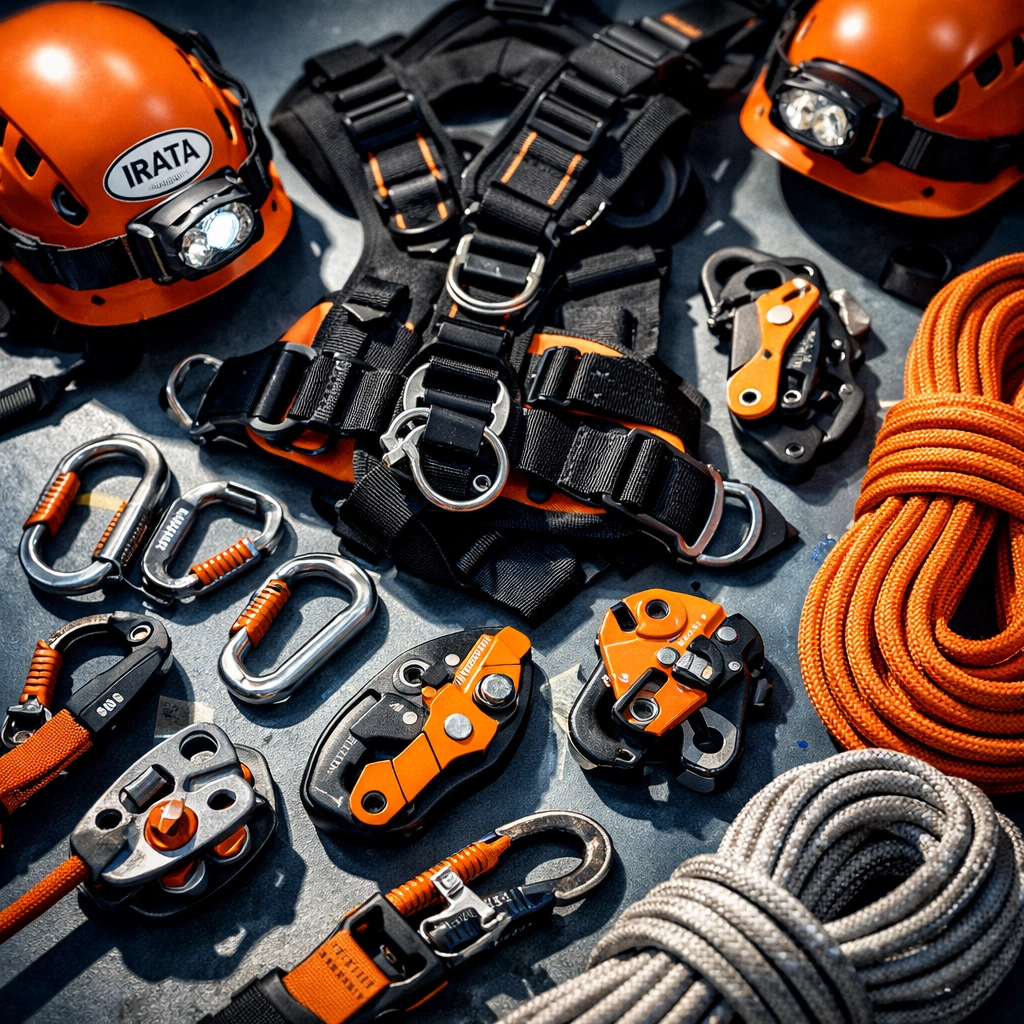
IRATA (Industrial Rope Access Trade Association) certification is the industry standard. It requires:
- Rigorous training and competency assessments
- Regular re-certification
- Demonstrated safety protocols
- Technical proficiency
But IRATA-certified technicians who also understand renewable energy infrastructure are rare.
Wind turbine blade repairs require knowledge of composite materials. Solar PV maintenance demands electrical competency. Offshore environments add another layer of complexity: marine conditions, weather windows, confined spaces.
Energy firms and specialist contractors are competing for the same limited pool of qualified technicians.
The shortage is driving:
- Higher day rates for certified technicians
- Longer lead times for project scheduling
- Increased pressure to upskill existing workforces
- Greater reliance on specialist recruitment partners
Alpha Jobs works directly with energy firms to source IRATA-certified rope access technicians with renewable sector experience. It's a specialist skill set. Standard recruitment channels don't cut it.
Safety and Compliance: Non-Negotiable Standards
Rope access maintains one of the best safety records in industrial work. The accident rate sits at just 0.1%.
That's not luck. That's rigorous training, strict protocols, and ongoing compliance.
For renewable energy projects, safety is paramount:
- High-altitude work environments
- Offshore and onshore exposure
- Weather variability
- Complex technical tasks
IRATA-certified technicians follow standardized safety procedures that apply across industries and geographies. Energy firms benefit from that consistency.
At Alpha Jobs, we hold ISO 9001:2015 certification: demonstrating our commitment to quality management and continuous improvement in how we source and place technicians.
When you're staffing critical renewable infrastructure projects, compliance isn't a checkbox. It's a foundation.
Environmental Credentials: Aligning Methods with Mission
Renewable energy projects exist to reduce environmental impact. The maintenance methods should reflect that.
Rope access delivers sustainability benefits:
- Minimal carbon emissions (no heavy machinery transport)
- Reduced noise and vibration
- No ground disturbance
- Lower waste generation
- Smaller site footprint
For energy companies with ESG commitments, rope access aligns operational methods with brand values. It's maintenance that walks the talk.
Scaffolding requires trucks, raw materials, assembly, and dismantling: all resource-intensive. Cranes burn fuel and require significant ground preparation. Rope access sidesteps most of that.
It's a cleaner, quieter, and more environmentally responsible approach.
Why Energy Firms Are Shifting Strategy
Forward-thinking energy companies and specialist contractors are already embedding rope access into project planning.
The shift is driven by:
- Operational efficiency: Faster turnarounds mean higher asset utilization
- Cost control: Budgets are tight; rope access stretches them further
- Safety performance: Lower accident rates reduce liability and downtime
- Environmental alignment: Methods match mission
- Scalability: As renewable capacity grows, rope access scales with it
But execution depends on workforce availability. Securing IRATA-certified technicians with renewable experience requires specialist recruitment support.
Alpha Jobs specializes in sourcing technical talent for the renewable energy sector. We understand the skill requirements, the compliance landscape, and the urgency energy firms face.
What 2026 Looks Like
Demand for rope access in UK renewables isn't slowing. It's accelerating.
Offshore wind: More turbines, more maintenance cycles, more blade inspections.
Commercial solar: Continued adoption across industrial rooftops, warehouses, and commercial estates.
Onshore wind and hydro: Aging infrastructure requiring more frequent repairs and upgrades.
The technicians who can do this work safely and efficiently are the bottleneck.
Energy firms that plan ahead: building relationships with specialist recruiters, securing IRATA-certified talent early, and integrating rope access into project timelines: will have the advantage.
Those that don't will face delays, cost overruns, and operational inefficiencies.
Final Word
Rope access isn't experimental. It's proven. The cost savings are documented. The safety record speaks for itself. The efficiency gains are measurable.
For 2026 renewable projects, it's not just an option. It's a strategic imperative.
If you're an energy firm or specialist contractor looking to secure IRATA-certified rope access technicians for upcoming projects, get in touch. We're already working with major players in the sector. The conversation is worth having.