What Every Project Manager Needs to Know
![[HERO] Hiring Rope Access Technicians in the UK: What Every Project Manager Needs to Know](https://cdn.marblism.com/GlyRoTirO0T.webp)
Rope access work isn't something you can wing. Whether you're managing high-rise maintenance, offshore wind turbine inspections, or industrial chimney repairs, hiring the right rope access technicians in the UK requires more than posting a job ad and hoping for the best.
The stakes are high, literally. One unqualified hire can derail timelines, compromise safety, and land you in hot water with HSE regulations. This guide breaks down what project managers need to know when recruiting rope access professionals, from certification requirements to why partnering with specialist construction agencies in Sheffield makes all the difference.
Understanding IRATA Certification: The Non-Negotiable Standard
When hiring rope access technicians UK-wide, IRATA (Industrial Rope Access Trade Association) certification is your first checkpoint. It's the industry gold standard, and frankly, it's non-negotiable.
IRATA certification comes in three levels, each with distinct capabilities and legal responsibilities:
Level 1 – Entry-Level Operator
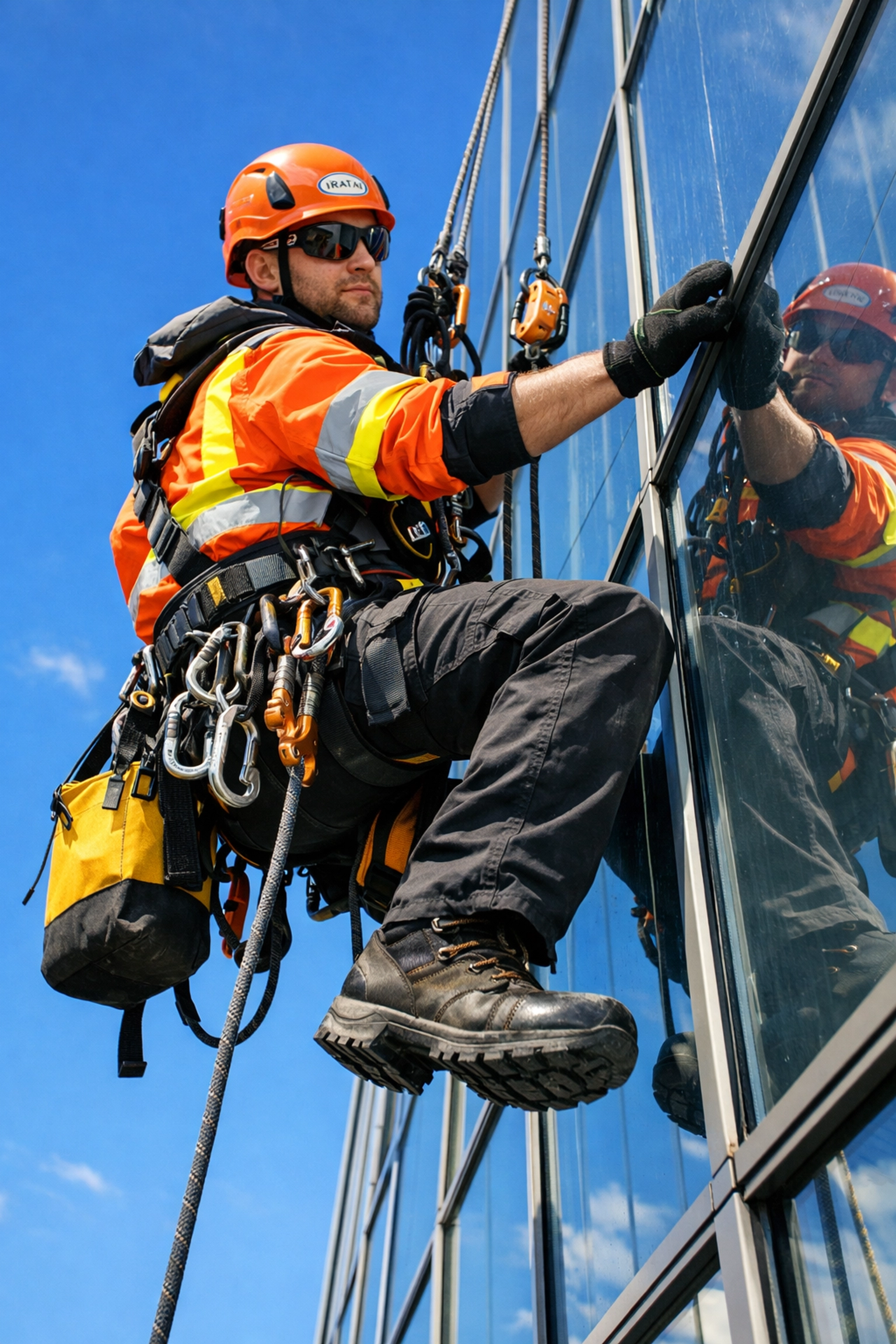
Level 1 technicians have completed a minimum 4-day training course. They can perform rope access tasks but must work under direct supervision of a Level 3 technician. These operators handle operational tasks using existing rigging systems but cannot independently set up rigging or take supervisory roles.
Key limitations:
- Must be supervised at all times
- Cannot create rigging systems
- Entry-level operational work only
Level 2 – Lead Technician
Level 2 requires at least one year of experience and 1,000+ logged hours on rope access work. The 5-day training course covers advanced rope maneuvers, rigging setup, and colleague rescue scenarios. These technicians work with greater independence and handle complex tasks, though they still operate under Level 3 supervision.
What they can do:
- Set up rigging systems
- Perform advanced rope maneuvers
- Lead smaller teams on-site
- Execute rescue operations
Level 3 – Site Supervisor
Level 3 represents the highest qualification, requiring 2,000+ logged hours. These technicians are responsible for overall site supervision, rescue coordination, and risk management. Legally, any site involving rope access work must have an IRATA Level 3 supervisor present.
Critical responsibilities:
- Overall site supervision
- Risk assessment and management
- Rescue coordination
- Can become qualified instructors
- Must hold valid first aid certificate
All IRATA certifications remain valid for three years before requiring re-qualification. Don't assume: always verify current certification status.
Beyond IRATA: Additional Mandatory Certifications
IRATA certification is the foundation, but it's not the whole picture. Under the Work at Height Regulations (WAHR) 2005, rope access technicians must hold additional certifications:
- CSCS Card – Proves competence in construction-related work
- First Aid at Height Certification – Required for emergency response readiness
- PASMA Training – Necessary when combining rope access with ground-level scaffolding systems
Missing any of these? Your project won't pass muster with HSE inspections.
Why DIY Hiring Falls Short for High-Risk Roles
Here's the reality: recruiting rope access technicians through general job boards or handling it in-house is inefficient and risky. These aren't warehouse operatives or admin staff: they're specialists working in high-consequence environments.
The Hidden Costs of DIY Recruitment
Time drain: Vetting IRATA certifications, verifying logged hours, checking current CSCS cards, and confirming first aid credentials takes significant time. Project managers already juggling site logistics don't have bandwidth for deep-dive recruitment checks.
Compliance risk: Missing an expired certification or hiring a Level 1 technician for unsupervised work creates legal liability. HSE penalties for non-compliance aren't just expensive: they damage reputation.
Network limitations: Specialist rope access technicians don't typically scroll through Indeed or LinkedIn. They operate within tight-knit industry networks and rely on agencies with established reputations.
What Specialist Recruitment Agencies Bring
Working with a recruitment agency in Sheffield like Alpha Jobs means tapping into 18+ years of experience connecting expert professionals with employers in technical sectors. We maintain pre-vetted talent pools of IRATA-certified technicians, handle compliance checks before candidates reach your desk, and understand nuances like project-specific requirements for offshore wind versus industrial chimney work.
It's not about outsourcing headaches: it's about accessing specialized infrastructure you don't have time to build yourself.
Cost and Time: Why Rope Access Beats Traditional Scaffolding
Beyond hiring considerations, understanding why rope access has become the preferred method for high-level work helps justify investment in quality technicians.
Speed of Deployment
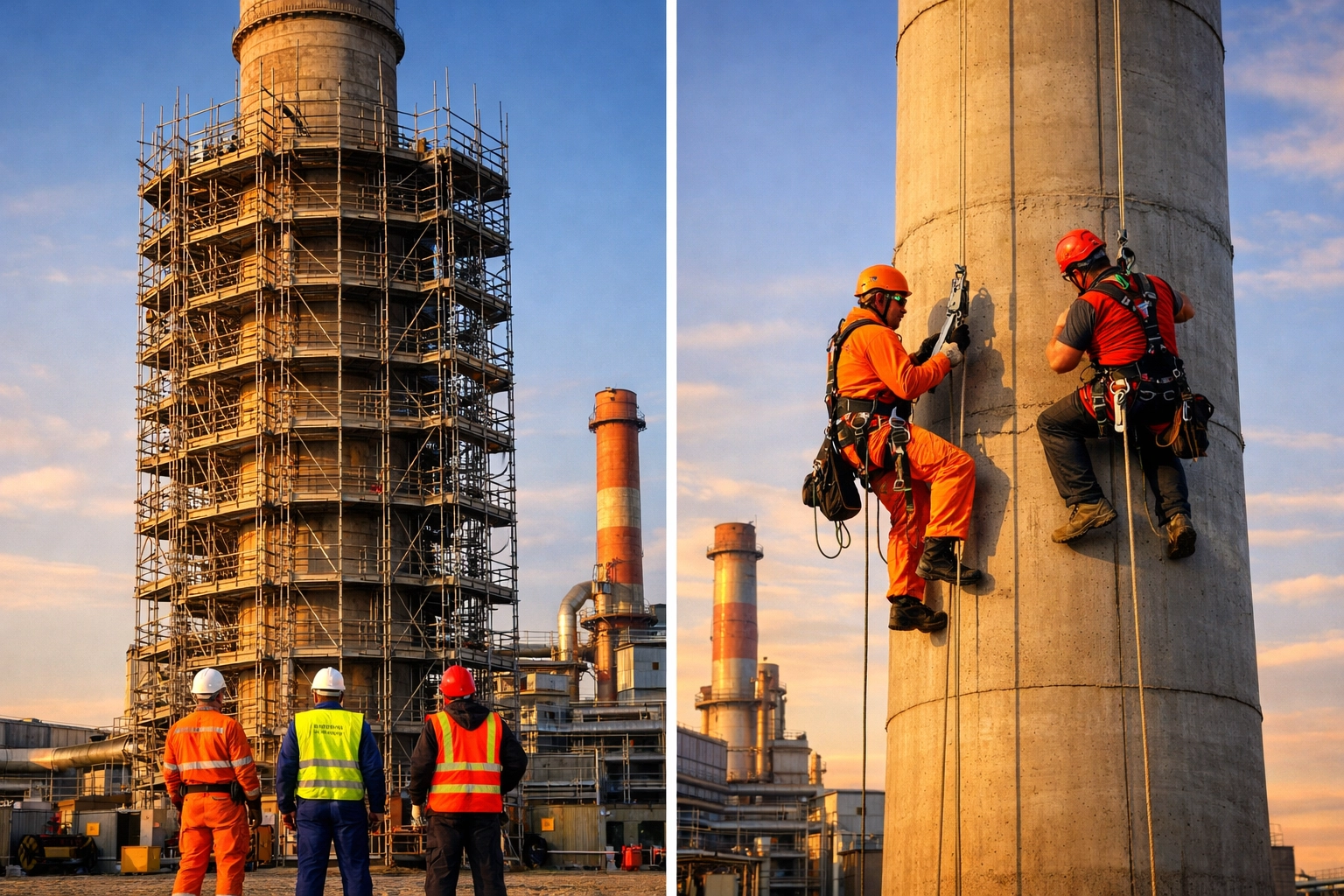
Traditional scaffolding requires days or weeks to erect, depending on structure height and complexity. Rope access teams can begin work within hours of arriving on-site. For projects with tight deadlines: particularly in renewable energy sectors where downtime equals lost revenue: this speed advantage is substantial.
Cost-Effectiveness
Scaffolding costs accumulate quickly: materials, labor for erection and dismantling, hire duration, transport logistics, and site footprint requirements. Rope access eliminates most of these expenses. A small team of IRATA-certified technicians can access difficult areas without massive infrastructure investment.
Typical cost comparison:
- Large-scale scaffolding project: £50,000–£150,000+
- Rope access equivalent: £10,000–£30,000
The math is straightforward. Rope access delivers better ROI on suitable projects.
Safety Profile
Counterintuitively, rope access often presents lower safety risks than scaffolding. IRATA reports consistently show rope access work has one of the lowest accident rates in industrial sectors. Rigorous certification requirements, mandatory supervision structures, and specialized rescue training create robust safety protocols.
What Alpha Jobs Brings to Your Rope Access Projects
At Alpha Jobs, we're not a generic job agency Sheffield businesses settle for when they can't find alternatives. We're specialists in technical recruitment with deep roots in construction, industrial maintenance, and renewable energy sectors.
Our Credentials Matter
- ISO 9001 Accredited – Quality management systems meeting international standards
- Alcumus Approved – Demonstrating commitment to safety, health, and risk management
- TICA Member – Recognized expertise in technical and specialist sector staffing
These aren't just badges on a website. They represent verified processes ensuring every candidate we place meets rigorous standards.
What We Actually Do
Pre-qualification: Every rope access technician in our network has verified IRATA certification, current CSCS cards, and logged work hours. We don't pass along candidates who "might be suitable": we present professionals ready to work.
Speed: Need a Level 3 supervisor for an urgent wind turbine project? We maintain active relationships with available technicians. No lengthy recruitment cycles.
Sector knowledge: We understand the difference between hiring for offshore platforms versus bridge inspections versus industrial cleaning. Requirements vary, and generic recruiters miss these nuances.
Ongoing support: Our relationship doesn't end when someone starts work. Issues arise, projects change scope, and additional resources become necessary. We're available throughout project lifecycles.
Making the Right Hiring Decision
When evaluating rope access technicians, confirm certification levels match job requirements. Don't assume a Level 1 can work unsupervised. Verify all certifications are current: expired qualifications require re-certification before work commences. Request logged work hours documentation, particularly for Level 2 and Level 3 candidates, as these demonstrate hands-on competency beyond training completion.
For project managers in construction, industrial maintenance, and renewable energy sectors, the question isn't whether to use rope access: it's how quickly you can access qualified technicians who won't create compliance headaches or safety incidents.
If you're planning projects requiring rope access specialists, Alpha Jobs can connect you with IRATA-certified professionals across all levels. With 18+ years placing expert technicians in high-risk environments, we understand what's actually required: not just what looks good on paper.
Contact us to discuss your rope access requirements, or visit alphajobs.net to see how we support project managers across the UK's most demanding technical sectors.