
Test Owner
Finding the Right Fit

Why Freelance Site Managers are the Backbone of UK Interiors Projects
![[HERO] Finding the Right Fit: Why Freelance Site Managers are the Backbone of UK Interiors Projects](https://cdn.marblism.com/1a0uLlTVYuy.webp)
The UK shopfitting and interiors industry is defined by speed, precision, and high-pressure deadlines. Whether it is a luxury retail rollout in London, a high-end office refurbishment in Manchester, or a nationwide hospitality fit-out, the demand for agility has never been higher. In 2026, the landscape of construction trades recruitment uk has shifted heavily toward a flexible, freelance-led workforce to meet these demands.
At the heart of every successful interiors project is the Site Manager. While permanent roles have their place, the rise of the freelance Site Manager has become a strategic advantage for firms looking to scale rapidly without the burden of permanent overheads.
The High-Stakes World of UK Interior Fit-Outs
Shopfitting is unlike general construction. It often operates in live environments: malls, busy city centres, or operational office blocks: where work must be completed overnight or within incredibly tight windows. A delay of even 24 hours can result in missed store openings and significant financial penalties.
Because of this, the recruitment of vetted construction workers nationwide is not just a logistical necessity; it is a risk management strategy. Companies require a workforce that can hit the ground running, understand complex blueprints immediately, and maintain the highest safety standards under pressure.
The Freelance Revolution: Why Site Managers Lead the Charge
Freelance Site Managers are the linchpin of the interiors sector. They provide the "boots on the ground" leadership required to coordinate multiple trades simultaneously.
1. Strategic Flexibility and Cost Efficiency
Hiring a freelance Site Manager allows companies to match their leadership resources to specific project timelines. This eliminates the costs associated with long-term salaries, benefits, and downtime between projects. For interior fit-out firms, this per-project model ensures that project budgets are spent directly on delivery rather than administrative overhead.
2. Specialized Expertise on Demand
Every interior project is unique. One week might require a specialist in high-end retail finishes, while the next requires a manager experienced in heavy structural refurbishments for commercial spaces. Freelance managers often bring a broader "portfolio" of experience, having worked across various sectors, which allows them to solve on-site problems with a fresh and highly experienced perspective.
3. Operational Excellence and Autonomy
Freelance Site Managers are often more accustomed to "hitting the ground running." They are experts at navigating the logistics of different sites, managing subcontractors, and ensuring that site labour hire solutions are utilized effectively. Their role involves:
- Coordinating intricate schedules between joiners, electricians, and decorators.
- Ensuring strict adherence to health and safety regulations.
- Managing resource allocation to prevent bottlenecks.
- Liaising with clients and stakeholders to provide real-time updates.
You can view some of our active leadership requirements here: Site Manager Roles.
Beyond Management: The Essential Trades and Labour Force
While the Site Manager provides the direction, the quality of the finish depends on the skill of the tradespeople on-site. In the interiors sector, the "finish" is everything. Clients pay for perfection in the joinery, the lighting, and the thermal insulation.
The Demand for Vetted Trades
To maintain a high standard, Alpha Jobs focuses on providing vetted construction workers nationwide. This includes specialized roles such as:
- Joiners and Carpenters: The core of most shopfitting projects. From bespoke cabinetry to structural partitioning. View Joiner roles.
- Electricians: Essential for the sophisticated lighting systems required in modern retail and office environments. View Electrical roles.
- Thermal Insulation Engineers: Crucial for commercial refurbishments where energy efficiency and climate control are paramount. View Insulator roles.

Our Rigorous Vetting Process
In a fast-paced environment, you cannot afford to hire based on a CV alone. We understand that a "vetted" worker means more than just a background check; it means verifying their ability to perform under the specific conditions of a UK interiors project.
Our vetting process involves:
- Credential Verification: Ensuring all workers hold the necessary CSCS, CPCS, or trade-specific cards (such as JIB for electricians).
- Reference Checking: Speaking with previous site managers to confirm reliability and quality of work.
- Compliance Monitoring: Ensuring all freelance workers have the right to work and are fully compliant with UK tax and employment laws.
The Alpha Jobs Commitment: Quality Guaranteed
With over 18 years of experience in the recruitment and staffing industry, Alpha Jobs has built a reputation for reliability and quality. We don’t just fill gaps in a rota; we provide human capital that drives project success.
The Alpha Jobs Commitment is our promise to maintain the highest standards of service through rigorous accreditation and industry participation. We believe that our clients' projects are only as strong as the people we provide.
ISO 9001:2015 Accreditation
Quality management is at the core of our operations. Our ISO 9001 certification (Certificate No: 445142024) demonstrates our dedication to continuous improvement and internationally recognized service standards. This ensures that our internal processes for sourcing and placing candidates are consistently excellent.
TICA Membership
As proud members of the Thermal Insulation Contractors Association (TICA), we are uniquely positioned to provide specialist staffing in the insulation sector. This membership keeps us at the forefront of industry standards, particularly for complex interior refurbishments where thermal and acoustic insulation are critical.

Alcumus Approval
Safety is non-negotiable on any construction site. Our Alcumus approval signifies that Alpha Jobs meets the highest standards for workplace practices and risk management. When we provide site labour hire solutions, our clients can rest assured that we prioritize health, safety, and compliance above all else.
Why Nationwide Reach Matters in 2026
The interiors industry often involves "rollout" projects: where a brand refurbishes 50 stores across the country simultaneously. This requires a recruitment partner who can provide vetted construction workers nationwide at a moment’s notice.
Alpha Jobs leverages an extensive database and deep industry connections to source local talent in every corner of the UK. This reduces travel costs for our clients and ensures that local expertise is utilized, while maintaining a consistent quality standard regardless of the project's location.

Partnering for Success in UK Interiors
The backbone of the UK interiors sector is a combination of strategic leadership and skilled craftsmanship. By utilizing freelance Site Managers, companies gain the flexibility they need to compete in a high-speed market. By partnering with a specialist like Alpha Jobs, they gain the assurance that every worker: from the labourer to the manager: is vetted, qualified, and ready to deliver.
Key Benefits of Partnering with Alpha Jobs:
- 18 Years of Expertise: We understand the nuances of the UK construction market.
- Compliance Focused: Full Alcumus and ISO 9001 alignment.
- Specialist Sourcing: Access to TICA-certified insulation experts and skilled trades.
- Fast Response Times: We thrive on the high-speed requirements of the shopfitting industry.
As the industry continues to evolve in 2026, the reliance on a flexible, high-quality workforce will only increase. Ensuring you have the right "fit" for your project: not just in terms of skills, but in terms of reliability and accreditation: is the key to finishing on time and on budget.
For more information on our construction trades recruitment uk or to discuss your upcoming project requirements, visit our Main Website.
The Ultimate Guide to Vetted CPCS Operators

Hiring Nationwide with Confidence
![[HERO] The Ultimate Guide to Vetted CPCS Operators: Hiring Nationwide with Confidence](https://cdn.marblism.com/MXBuZmi4Vmm.webp)
The UK construction landscape in 2026 is moving faster than ever. With the "Green Transition" in full swing, renewable energy retrofits and EV infrastructure rollouts are demanding a higher standard of plant operation. At the center of almost every major site operation is the telehandler. Whether it’s moving pallets of solar panels or supporting the framework of a new battery storage facility, the quality of your operator determines your project's safety and efficiency.
Finding reliable, vetted construction workers nationwide is no longer just a "nice to have": it is a operational necessity. As site requirements become more stringent, the need for high-quality site labour hire solutions has never been more pressing.
Why CPCS Certification is the Industry Gold Standard
The Construction Plant Competence Scheme (CPCS) remains the most recognised card scheme for plant operators in the UK. Since its inception, it has provided a structured path for operators to prove their skills and for employers to verify competency.
The Difference Between Red and Blue Cards
Understanding the distinction between CPCS cards is the first step in effective construction trades recruitment UK:
- Red Trained Operator Card: This indicates the operator has passed the relevant theory and practical tests. They are considered "trained" but are still gaining the necessary on-site experience to reach full competency. This card is valid for two years and is non-renewable.
- Blue Competent Operator Card: This is the benchmark for excellence. To hold a Blue card, an operator must have completed a relevant NVQ or SVQ and passed the CITB Health, Safety & Environment test. It proves the holder has the skills, knowledge, and experience to operate machinery safely and effectively on complex sites.
The Strategic Importance of Telehandler Operators
Telehandlers are the workhorses of the modern construction site. Their versatility makes them indispensable, but it also makes them one of the most high-risk pieces of equipment if operated by someone without the proper vetting.
In 2026, we are seeing a surge in demand for specialist telehandler operators who can navigate the tight footprints of urban developments and the rough terrain of rural solar farms. Hiring through a specialist agency ensures that you get operators who are not just "card carriers" but experienced professionals.
Key Categories for Telehandlers
- A17 C: Telescopic Handler (All sizes excluding 360 sway).
- A17 D: Telescopic Handler (Including 360 sway).
- A77: Telescopic Handler (360 Rotation).
Selecting the right category is essential. Using an operator without the specific category endorsement on their CPCS card can invalidate your insurance and lead to significant site delays.

The Risks of Unvetted Labour
The pressure to meet project deadlines often leads firms to take shortcuts in recruitment. However, the cost of an unvetted operator far outweighs any perceived time savings.
1. Safety Hazards
An operator who hasn't been properly vetted may lack the practical experience to handle equipment in challenging conditions. This increases the risk of site accidents, injuries, and fatalities.
2. Equipment Damage
Plant machinery is a significant investment. Inexperienced operators are more likely to cause mechanical wear or accidental damage, leading to expensive repair bills and downtime.
3. Legal and Compliance Failures
In 2026, HSE inspections are more frequent and focused on competency documentation. If your site labour hire solutions don't include a robust audit trail of CPCS verification, your business faces heavy fines and reputational damage.
The Alpha Jobs Commitment: A Higher Standard of Vetting
At Alpha Jobs, we don’t just supply workers; we provide peace of mind. With 18 years of experience in the recruitment and staffing sector, we have refined a vetting process that is rigorous, transparent, and built on industry best practices.
Our vetting process includes:
- Visual and Digital Card Checks: We verify every CPCS card through the NOCN/CITB databases to ensure validity and correct category endorsements.
- Reference Verification: We speak with previous site managers to confirm the operator's work ethic, technical skill, and safety record.
- Right to Work Documentation: Full compliance with UK employment law is guaranteed for every worker we place.
- Competency Assessments: We ensure that the operator's experience matches the specific needs of your project, whether it's a high-rise residential build or a renewable energy installation.
By focusing on high-quality construction trades recruitment UK, we ensure our clients can focus on delivery while we handle the compliance.
Nationwide Reach with Local Expertise
Whether you are looking for CPCS operatives in Manchester or need a team for a project in Colchester, our national network allows us to mobilise vetted construction workers nationwide quickly.
We understand that site requirements change. You might need a single telehandler operator for a week or a full plant team for a three-year project. Our database is maintained in real-time, ensuring we can provide site labour hire solutions that scale with your project demands.
Accreditations That Guarantee Quality
We believe that our internal processes should be held to the highest international standards. This is why Alpha Jobs maintains a suite of accreditations that reflect our dedication to quality and safety.
ISO 9001:2015 Certification
Our quality management system is ISO 9001 certified (Certificate No: 445142024). This means our recruitment processes: from initial contact to final placement: are consistently audited to ensure they meet the highest standards of service delivery.
TICA Membership
As a member of the Thermal Insulation Contractors Association (TICA), we demonstrate our commitment to specialist sectors within construction. This membership ensures we stay at the forefront of industry regulations and training standards, which we pass on to our clients through the quality of our candidates.
Alcumus Approved
Our Alcumus approval highlights our commitment to health, safety, and risk management. It provides our clients with the confidence that we operate a safe and ethical business, prioritising the well-being of the workers we place and the integrity of the sites they work on.
Driving Efficiency in the 2026 Green Transition
The "Green Transition" isn't just a buzzword; it's a fundamental shift in how UK construction operates. Renewable energy projects require a different pace and precision than traditional builds. Solar farm installations and EV infrastructure rollouts often happen in remote locations or require rapid scaling of labour.
Vetted CPCS telehandler operators are essential for these projects. They are responsible for the logistics of expensive, sensitive equipment like solar modules and high-capacity batteries. Having a team that understands the specific safety protocols of a "Green" site is invaluable.
How to Secure Your Next CPCS Operator
When you are ready to hire, the process should be seamless. We have streamlined our intake to make it easy for site managers and procurement teams to get the talent they need.
- Define the Scope: Determine if you need a Red or Blue card holder and which specific telehandler categories are required.
- Contact Alpha Jobs: Reach out via our website to discuss your project timelines and location.
- Review Vetted Profiles: We provide you with candidates who have already passed our multi-stage vetting process.
- Deployment: Our operators arrive on-site with the correct PPE, valid cards, and a clear understanding of their role.
Conclusion: Partnering for Site Success
In a market where skilled labour is increasingly scarce, your choice of recruitment partner is a strategic decision. By choosing Alpha Jobs, you are opting for 18 years of industry expertise and a commitment to quality that is backed by ISO 9001 and Alcumus standards.
Whether you are managing a major civil engineering project or a local housing development, our site labour hire solutions are designed to mitigate risk and drive productivity. Don't leave your site safety to chance: ensure your next CPCS operator is fully vetted and ready to deliver.
For more information on our current vacancies or to hire a vetted team, visit our main site or check out our latest listings for Site Managers in Barnsley and Electricians in Liverpool.
The Ultimate Guide to Site Labour Hire Solutions

Everything You Need to Succeed in 2026
![[HERO] The Ultimate Guide to Site Labour Hire Solutions: Everything You Need to Succeed in 2026](https://cdn.marblism.com/3rQD9AnlRT7.webp)
The construction landscape in 2026 is defined by rapid technological integration, stringent safety regulations, and a heightened focus on sustainable infrastructure. For project managers and main contractors, securing reliable site labour hire solutions is no longer just about filling roles; it is about mitigating risk and ensuring project continuity.
As the industry evolves, the demand for vetted construction workers nationwide has surged. At Alpha Jobs, we understand that the success of a high-stakes project depends entirely on the quality and compliance of the workforce on the ground. This guide explores how to navigate the complexities of modern labour hire and why Alpha Jobs remains the partner of choice for the UK’s leading construction firms.
The Evolution of Site Labour Hire Solutions in 2026
The shift towards a "skills-first" hiring model has accelerated. Research indicates that 85% of employers now prioritise verified skills over traditional credentials. In 2026, site labour hire solutions must be agile, data-driven, and focused on compliance.
Why Vetting is Critical for High-Stakes Projects
Vetting is the cornerstone of safety and operational efficiency. In an era of increased litigation and tighter HSE inspections, deploying unverified labour is a significant liability.
- Risk Mitigation: Ensuring every worker has the correct CSCS/CPCS/JIB cards and relevant health and safety training.
- Project Continuity: Reducing turnover rates by matching the right skills to the right tasks from day one.
- Regulatory Compliance: Meeting the evolving standards of UK building regulations and site-specific safety protocols.
Nationwide Reach with Local Precision
Providing vetted construction workers nationwide requires a sophisticated logistical network. Alpha Jobs leverages 18+ years of industry experience to mobilise talent across the UK, ensuring that whether your project is in London, Manchester, or Cardiff, you have access to a reliable workforce.
Key Sectors for Specialised Labour Hire
Different construction disciplines require distinct verification processes. We provide tailored site labour hire solutions across five core sectors.
1. Scaffolding
Scaffolding remains one of the highest-risk sectors in construction. We provide Part 1, Part 2, and Advanced Scaffolders who are fully compliant with NASC standards. Our vetting ensures that every operative understands the complexities of TG20:21 and SG4:22.
2. Civil Engineering
From groundworks to heavy plant operation, our civils division supports major infrastructure projects. We provide vetted CPCS operatives who are experienced in managing complex site environments.
3. Electrical and Mechanical
Modern buildings require sophisticated electrical systems. We supply time-served electricians and electrical testers capable of handling industrial installations and maintenance. All workers are verified through the JIB/ECS grading system.
4. Renewable Energy
As the UK pushes towards Net Zero, the renewable energy sector has seen unprecedented growth. We provide labour solutions for solar farm installations, wind turbine maintenance, and EV charging infrastructure. This sector requires a workforce that is not only skilled but also adaptable to emerging green technologies.
5. Interior Fit-Out
Precision and finish are paramount in commercial fit-outs. We supply highly skilled joiners and carpenters who understand the demands of fast-track retail and office refurbishments.

The Alpha Jobs Credentials: A Foundation of Trust
In a competitive market, credentials serve as a benchmark for quality. Alpha Jobs has spent nearly two decades building a reputation based on transparency and excellence.
18+ Years of Industry Experience
Experience cannot be fast-tracked. Our long-standing presence in the recruitment and staffing sector allows us to anticipate market trends and maintain a deep database of vetted construction workers nationwide.
ISO 9001:2015 Certification
Quality management is at the heart of our operations. Our ISO 9001 certification demonstrates our commitment to consistent service delivery and continuous improvement.
Alcumus Approved
Our Alcumus accreditation highlights our dedication to workplace safety and risk management. We undergo rigorous audits to ensure our processes align with industry-leading health and safety standards.
TICA Membership
As a member of the Thermal Insulation Contractors Association (TICA), we are uniquely positioned to support specialist sectors. We provide thermal insulation engineers who meet the highest professional standards.
The Alpha Jobs Commitment
We operate under a clear set of principles designed to provide peace of mind to our clients. The Alpha Jobs Commitment is our pledge to deliver quality, reliability, and integrity in every placement.
Our Recruitment Process
- Requirement Assessment: We work closely with site managers to define the specific technical requirements of the role.
- Rigorous Vetting: We verify all certifications, right-to-work documentation, and references before any operative arrives on site.
- Strategic Matching: We use our extensive database to find candidates who are not just available, but who have a proven track record in the specific sector required.
- On-Site Integration: We ensure that workers are briefed on site-specific requirements to minimise downtime during the onboarding phase.
Time-to-Hire Efficiency
In the fast-paced environment of 2026, delays cost money. We aim to fulfill general labour requirements within 2-3 weeks and specialist trade roles within 4-6 weeks. For urgent gaps, our "silver-medalist" talent pool allows us to react even faster, often matching contract roles in under 8 days.
Leveraging Technology for Labour Management
While our service is built on human relationships, we utilise modern tools to streamline site labour hire solutions.
- Digital Compliance Logs: Real-time tracking of certifications and card expiry dates to ensure ongoing compliance.
- Integrated Timekeeping: Aligning labour hours with project phases for accurate billing and project management.
- Nationwide Database: A cloud-based system that allows us to source vetted construction workers nationwide with speed and accuracy.
Optimising Your Workforce Strategy in 2026
To succeed in the current market, contractors must move away from reactive hiring. A strategic partnership with a specialist labour provider allows for better budget control and operational flexibility.
Cost Optimization
Site labour hire solutions allow you to scale your workforce based on project demand. This reduces the overhead associated with permanent staff, such as long-term benefits and administrative maintenance, while still ensuring you have top-tier talent when needed.
Expert Knowledge on Demand
High-stakes projects often require niche skills for limited durations. Our model allows you to secure specialised expertise: such as site managers or steel erectors: without the burden of a long-term commitment.
Conclusion
The complexity of construction in 2026 demands a higher standard of recruitment. By focusing on vetted construction workers nationwide and implementing robust site labour hire solutions, Alpha Jobs provides the reliability and expertise required to complete projects on time and within budget.
Our credentials, from ISO 9001 to Alcumus approval, are a testament to our professional approach. We don't just provide labour; we provide the foundation for your project’s success.
Ready to secure a vetted workforce for your next project?
Visit www.alphajobs.net to learn more about our services or to discuss your specific labour requirements with our expert team.
From Solar Farms to Retrofitting

How to Secure Vetted Workers for High-Stakes Green Builds
![[HERO] From Solar Farms to Retrofitting: How to Secure Vetted Workers for High-Stakes Green Builds](https://cdn.marblism.com/mh0rQ15roLr.webp)
The UK construction landscape in 2026 is defined by one primary objective: the transition to Net Zero. As infrastructure projects shift focus toward sustainability, the demand for vetted construction workers nationwide has reached an all-time high. For project managers and developers, the challenge is no longer just finding "boots on the ground," but securing a workforce with the specialised technical skills required for renewable energy installation and large-scale retrofitting.
High-stakes green builds: ranging from sprawling utility-scale solar farms to the complex decarbonisation of social housing: leave no room for error. Compliance, safety, and technical precision are the benchmarks of success. At Alpha Jobs, we leverage over 18 years of experience in the recruitment and staffing sector to provide robust site labour hire solutions that meet these exacting standards.
The Landscape of Renewable Energy Installation in 2026
The surge in renewable energy projects has transformed the UK labour market. We are seeing a move away from traditional general labour toward highly specialised roles. Renewable energy installation labour hire UK services must now account for specific certifications and a deep understanding of sustainable infrastructure.
Solar Farm Groundworks and Civils Staffing
Utility-scale solar projects are moving at an unprecedented pace. These sites require more than just panel installers; they require a solid foundation built by expert civils and groundworks teams. Solar farm groundworks and civils staffing involves sourcing operatives who understand the unique environmental and logistical constraints of rural and brownfield energy sites.
Key requirements for these roles include:
- Proficiency in trenching and cable pulling for HV/LV networks.
- CPCS/NPORS accredited plant operators for sensitive site excavations.
- Experience in mounting structure installations and piling.
- Strict adherence to health and safety protocols in high-voltage environments.
For complex projects, having a qualified Site Manager who understands the nuances of renewable energy site logistics is critical to maintaining project timelines.

The Decarbonisation Challenge: Retrofitting at Scale
While new energy generation is vital, the retrofitting of existing building stock remains the most significant hurdle in the UK’s green transition. Retrofitting specialist recruitment for housing projects has become a core focus for local authorities and private developers alike.
Retrofitting is technically demanding. It involves a "whole-house" approach, requiring seamless coordination between multiple trades. Whether it is external wall insulation (EWI), window replacements, or internal air-tightness works, the margin for error is slim. Poorly executed retrofitting can lead to thermal bridging and moisture issues, making the vetting of workers non-negotiable.
Technical Specialisms in Retrofitting
- Thermal Insulation: High-quality insulation is the bedrock of any retrofit. We provide vetted Thermal Insulation Engineers to ensure compliance with the latest building regulations and energy efficiency standards.
- Airtightness and Ventilation: Ensuring buildings are "leak-proof" while maintaining adequate airflow.
- Carpentry and Joinery: Modifying existing structures to accommodate new technologies.
Meeting the Demand for Heat Pump Installations
The phase-out of traditional gas boilers has accelerated the need for qualified low-carbon heating engineers. As one of the leading heat pump installer recruitment agencies UK, Alpha Jobs focuses on bridging the gap between available talent and project demand.
Installing an Air Source Heat Pump (ASHP) or Ground Source Heat Pump (GSHP) is significantly more complex than a standard boiler swap. It requires a workforce that understands hydraulic balancing, heat loss calculations, and electrical integration. We supply Electricians and M&E specialists who are time-served and fully vetted to handle the electrical infrastructure upgrades often required by these systems.
The Alpha Jobs Commitment to Vetting and Quality
In a high-stakes environment, the quality of the workforce is the project’s greatest asset: or its greatest liability. We do not compromise on the calibre of the personnel we provide. Our internal processes are designed to mitigate risk for our clients through rigorous vetting and industry-recognised accreditations.
18+ Years of Specialist Expertise
With nearly two decades of experience, we have built an extensive database of reliable, skilled operatives. We understand the evolution of the construction industry and have adapted our recruitment strategies to match the technological shifts of 2026.
ISO 9001:2015 Certification
Our commitment to quality is backed by our ISO 9001:2015 certification. This internationally recognised standard ensures that our management systems are consistently providing services that meet client and regulatory requirements. In the context of green builds, this means every worker supplied has undergone a standardised, high-level vetting process.
Alcumus Approved and TICA Membership
Safety and compliance are paramount. As an Alcumus-approved organisation, we demonstrate our commitment to health and safety and risk management. Furthermore, our TICA (Thermal Insulation Contractors Association) membership highlights our specialist expertise in the insulation sector: a critical component of the UK's retrofitting strategy.
Strategising Your Workforce for 2026
To successfully deliver high-stakes green builds, developers must move away from reactive hiring and toward proactive workforce planning. This involves identifying the specific "green skills" required well in advance of the project start date.
Identifying Transferable Skills
The 2026 labour market often requires the transition of workers from traditional sectors into green roles. Many workers in civils, roofing, and general construction possess the core competencies needed for solar farm construction or retrofitting. Our role is to identify these transferable skills and ensure the workers have the necessary supplementary certifications (such as CSCS/ECS/CPCS) to hit the ground running.
Ensuring Nationwide Coverage
Green energy projects are rarely located in urban centres. Solar farms and wind infrastructure are often in remote areas. Alpha Jobs provides vetted construction workers nationwide, ensuring that no matter where your project is located: from the Scottish Highlands to the South Coast: you have access to a reliable labour pool.
The Importance of Compliance in Green Construction
The regulatory environment for green builds is stricter than ever. Grant-funded retrofitting projects often come with stringent reporting and compliance requirements. Using unvetted or under-qualified labour can lead to the loss of funding or significant legal penalties.
Our site labour hire solutions include comprehensive compliance checks:
- Verification of all trade-specific qualifications and tickets.
- Right to work and identity verification.
- Reference checking from previous technical projects.
- Ongoing monitoring of health and safety training.

Conclusion: Partnering for a Sustainable Future
The transition to a green economy is the greatest challenge and the greatest opportunity for the UK construction sector in 2026. Whether you are scaling a team for Solar farm groundworks and civils staffing or seeking a partner for Retrofitting specialist recruitment for housing projects, the quality of your labour supply will determine your project's success.
Alpha Jobs provides the technical expertise, the nationwide reach, and the 18+ years of industry experience required to navigate this landscape. Our accreditations: ISO 9001, Alcumus, and TICA: are not just badges; they are a testament to our dedication to quality.
When the stakes are high, rely on The Alpha Jobs Commitment. We deliver the vetted, professional workforce you need to build the infrastructure of tomorrow.
To discuss your project requirements or to source specialised labour, visit www.alphajobs.net and speak with our team today.
Future-Proofing Your Site

The 2026 Blueprint for Site Labour Hire Solutions
![[HERO] Future-Proofing Your Site: The 2026 Blueprint for Site Labour Hire Solutions](https://cdn.marblism.com/ehphp80D1u8.webp)
As we move further into 2026, the UK construction and engineering landscape faces a unique set of challenges. Projects are more complex, timelines are tighter, and the demand for skilled, vetted workers has never been higher. For site managers and project leads, the traditional "bums on seats" approach to recruitment is no longer viable. Success in the current climate requires a strategic approach to site labour hire solutions that prioritises agility, compliance, and long-term reliability.
The labour market in 2026 is defined by a shift towards reshoring, a focus on "skills-first" hiring, and the integration of advanced technology into workforce management. To stay ahead, businesses must adopt a blueprint that anticipates these shifts rather than reacting to them.
The 2026 Reality: Why Traditional Hiring is Failing
The construction industry is currently experiencing a period of intense infrastructure investment. This has created a compressed timeline for many projects, where delays in sourcing labour can lead to significant financial penalties. Reliance on unvetted, generalist agencies often results in high turnover, safety risks, and sub-par workmanship.
Today’s site requirements demand more than just manual labour; they require specialised skills that are verified and ready to deploy. Whether you are looking for articulated dumper drivers in Manchester or specialist joiners in Colchester, the vetting process must be rigorous and immediate.
The Strategic Pillars of Site Labour Hire Solutions
To future-proof your site, your labour strategy should be built on several key pillars that ensure stability and quality across the project lifecycle.
1. Proactive Talent Pipelines
Waiting until a vacancy exists to start the search is a recipe for delay. In 2026, the most successful firms are those that establish proactive pipelines. This involves engaging with recruitment partners who maintain a constant "warm" pool of vetted candidates.
- Localised Resilience: Focusing on regional talent helps mitigate the risks of travel disruptions and promotes local economic growth.
- Anticipating Demand: Mapping out project phases 6–12 months in advance allows for the gradual scaling of the workforce.
2. Skills-First Identification
The industry is moving away from rigid degree requirements in favour of demonstrated competency. In 2026, a worker's ability to perform specific tasks: verified by recent site history and trade-specific certifications: is more valuable than a generic CV.
- Focus on "trainability" and potential for niche roles.
- Prioritise candidates with up-to-date CPCS or CSCS credentials.

Establishing Trust: The Alpha Jobs Commitment
At Alpha Jobs, we understand that a project is only as strong as its weakest link. This is why our approach is rooted in The Alpha Jobs Commitment. With over 18 years of experience in the recruitment and staffing sector, we have refined a process that ensures every worker supplied to your site is not just a name on a list, but a vetted professional capable of meeting high standards.
Our longevity in the industry is a result of our commitment to quality over quantity. We don't just fill gaps; we provide site labour hire solutions that contribute to the overall efficiency and safety of your project.
Credentials That Matter in 2026
In an era of increased regulation and safety oversight, credentials are the bedrock of site operations. Choosing a partner without the necessary accreditations exposes your business to unnecessary risk.
Alpha Jobs is proud to maintain the following industry-leading standards:
- ISO 9001 Accredited: Our ISO 9001:2015 certification for quality management demonstrates our commitment to internationally recognised standards and continuous improvement in our service delivery.
- Alcumus Approved: This accreditation confirms our compliance with the highest standards for workplace practices and risk management.
- TICA Member: As a member of the Thermal Insulation Contractors Association, we demonstrate specialist expertise and compliance in thermal insulation staffing.
Scaling with Flexibility: The Contingent Labour Model
The volatility of the 2026 economy means that project scopes can change rapidly. A future-proofed site uses a flexible contingent labour model. This allows for:
- Rapid Scale-Up: Sourcing large teams of site managers or steel erectors during peak phases.
- Risk Mitigation: Reducing the overhead of permanent staff during lulls between project stages.
- Specialist Access: Bringing in highly niche workers, such as thermal insulation engineers, exactly when they are needed for specific installations.
The Role of Technology in Modern Recruitment
Artificial Intelligence and data-driven matching are no longer futuristic concepts; they are essential tools for site labour hire solutions in 2026. At Alpha Jobs, we leverage technology to:
- Improve Quality-of-Fit: Matching candidate skills, availability, and previous performance history with specific site requirements.
- Accelerate Hiring: Reducing the time-to-hire by automating the initial vetting and documentation phases.
- Ensure Compliance: Using digital systems to track certification expiry dates and site-specific induction completions.
Sector-Specific Labour Solutions
Different sectors within the construction and engineering industries require tailored approaches. A "one size fits all" strategy rarely works for high-stakes projects.
Civil Engineering and Infrastructure
The demand for articulated dumper drivers and heavy machinery operators remains high. These roles require strict adherence to safety protocols and precise technical skill.
Mechanical and Electrical (M&E)
For M&E projects, precision is everything. Whether you need an electrical tester in Manchester or an electrician in Liverpool, the verification of "time-served" experience is a non-negotiable part of our vetting process.
Specialist Trades
Specialist trades, such as thermal insulation engineers' mates, provide the essential support needed for complex industrial applications. Our TICA membership ensures we understand the specific needs of these specialist environments.
Compliance as Infrastructure
In 2026, compliance is not a reactive "tick-box" exercise; it is foundational infrastructure. A failure in compliance can halt a project entirely.
- Standardised Safety Programmes: All workers must be aligned with the specific safety culture of the site from day one.
- Accurate Record-keeping: Digital trails for every worker, including right-to-work checks and medical fitness certificates.
- Worker Autonomy: Providing workers with frictionless access to their schedules and job details through mobile engagement tools, which has been shown to improve retention and satisfaction.
Why Alpha Jobs?
With nearly two decades of experience, Alpha Jobs has built a reputation for reliability. We operate as an extension of your project management team, providing the labour you need to meet your milestones. Our focus on site labour hire solutions means we take the burden of recruitment, vetting, and compliance off your shoulders, allowing you to focus on the build.
- 18 Years of Experience: A proven track record across UK construction and engineering.
- National Reach: Capable of supplying labour to sites across the UK.
- Vetted Professionals: Every candidate undergoes a rigorous screening process.
- Industry Expertise: Deep knowledge of trades, from carpenters to site managers.
Conclusion: Preparing for the Future
The remainder of 2026 will continue to test the resilience of the construction industry. By choosing a recruitment partner that prioritises quality, uses advanced matching technology, and holds the highest industry accreditations, you can ensure your site is prepared for whatever challenges arise.
Future-proofing your site is about more than just finding people; it’s about finding the right people, at the right time, backed by a guarantee of quality.
For more information on how we can support your next project with bespoke site labour hire solutions, visit our website at alphajobs.net.
Beyond the Shell

How Alpha Jobs Sources the Best Shopfitting Talent in the UK
![[HERO] Beyond the Shell: How Alpha Jobs Sources the Best Shopfitting Talent in the UK](https://cdn.marblism.com/Oqi94_rn7eI.webp)
In the world of Flannels - Fraser Group and commercial interiors, the "shell" is just the beginning. The real magic happens during the fit-out: those frantic, high-pressure weeks where a dusty concrete box is transformed into a flagship store for Hugo Boss or a sleek new Costa Coffee. In this industry, deadlines aren't suggestions; they are absolute. If a shop isn't ready for the grand opening, the costs aren't just measured in wasted materials, but in lost revenue and bruised brand reputations.
This is why construction trades recruitment uk is more than just filling boots on-site. It is about precision, reliability, and finding the specific breed of craftsman who understands that in shopfitting, a millimetre might as well be a mile.
At Alpha Jobs, we have spent over 18 years perfecting the art of sourcing this talent. We don't just provide workers; we provide the peace of mind that your programme will stay on track.
The Alpha Pedigree: 18 Years in the Making
Established in 2008, Alpha Jobs was built on a foundation of genuine site experience. We didn't start in a sterile office with a LinkedIn Premium account. The company was born from a deep understanding of the operational pressures that site managers face every day.
When you engage with us for site labour hire solutions, you are talking to an organisation that speaks your language. We know the difference between a domestic carpenter and a high-end retail joiner. We understand why a specialised electrical tester in Manchester is a different beast altogether from a standard house-basher.
This industry-specific insight allows us to filter out the noise and present only the candidates who can actually do the job.
A Living, Breathing Database of Vetted Talent
Many recruitment agencies claim to have a "vast database." In reality, many of these are digital graveyards: lists of names and disconnected phone numbers from five years ago.
Our approach to construction labour supply uk is different. We maintain and continually update a UK-wide network of vetted construction workers nationwide. This is a proactive process:
- Constant Refreshing: We are in daily contact with our workforce, tracking where they are, what their current tickets are, and when they are next available.
- Regional Strength: With offices in Sheffield, Manchester, Nottingham, London, and Scotland, we leverage local knowledge. We know who the best crews are in the City of London and who can handle a fast-paced fit-out in Liverpool.
- Short-Notice Response: Because we focus on local recruitment, we can often deliver resources at incredibly short notice: essential for those emergency "snagging" phases or sudden spikes in manpower requirements.
Why Quality Vetting Matters in Shopfitting
Shopfitting is unique. Unlike a long-term civil engineering project, a fit-out is often a sprint. You don't have three weeks to figure out if a new joiner is up to the task. They need to hit the ground running on day one.
Our vetting process goes beyond checking a CSCS card. While we ensure all compliance is met, we also look for:
- Relevant Experience: Have they worked on retail or leisure projects before? Do they understand the finish required for a brand like John Lewis or Footlocker?
- Attitude: Shopfitting sites are often cramped and high-stress. We source workers who are proactive and collaborative.
- Reliability: In a six-week programme, a two-day absence can be catastrophic. We track the reliability history of every worker in our system.

Standards You Can Trust: ISO 9001 and Alcumus
In an industry sometimes plagued by "cowboy" operators, Alpha Jobs stands apart through rigorous third-party accreditation. We don't just say we are good; we prove it.
ISO 9001:2015 Certification
We hold the ISO 9001:2015 Certification for quality management. This isn't just a badge on our email signatures; it represents a commitment to internationally recognised standards in our service delivery. It means our internal processes: from how we vet a joiner in Colchester to how we handle client billing: are audited and consistent.
Alcumus Approved
Safety and compliance are non-negotiable. Being Alcumus approved demonstrates our commitment to industry-leading standards for workplace practices and risk management. When we supply vetted construction workers nationwide, you know they are coming from an agency that takes its legal and moral obligations seriously.
The "Founder's Guarantee"
We are so confident in our ability to find the right person for your site that we offer The Founder's Guarantee.
Our approach is simple: if we send someone to your site and they aren't the right fit, we’ll replace them. We take the risk so you don't have to. Clear accountability. Consistent delivery.
Whether you need a site manager in Barnsley or a team of shopfitters for a nationwide rollout, that guarantee stands.
Servicing the Retail Giants
Our track record speaks for itself. We haven't just supplied a few local shops; we have been the silent engine behind some of the UK’s most recognisable retail and leisure fit-outs. Our candidates have worked on projects for:
- Mass Market Retail: TK Maxx, JD Sports, Footlocker.
- Department Stores: John Lewis.
- Leisure & Food: Costa Coffee and various restaurant fit-outs.
These brands demand perfection. Their contractors choose Alpha Jobs because they know we can provide the construction labour supply uk needs to meet those exacting standards.
Technical Expertise Across the Board
Shopfitting isn't just about joinery. It involves a complex web of trades working in a highly synchronised dance. Alpha Jobs provides the full spectrum of talent required for a complete interior fit-out:
- Carpenters and Joiners: For everything from structural stud work to intricate display units.
- Electricians: Specialised in commercial lighting and data cabling.
- Painters and Decorators: For that final, all-important aesthetic finish.
- Thermal Insulation Engineers: Crucial for commercial HVAC and energy efficiency in large units. (As proud TICA members, we are particularly well-placed to supply specialised insulation mates and engineers).
- Labourers: Reliable, hard-working hands to keep the site moving and clear.
Sourcing Locally, Delivering Nationally
One of the biggest mistakes in construction trades recruitment uk is trying to send a crew from London to Glasgow for a three-day job. It’s expensive, the workers are tired, and the local engagement is zero.
Alpha Jobs prioritises local sourcing. By tapping into our regional hubs, we ensure that the workers on your site are local to the project. This leads to:
- Better Punctuality: No "train delays from 200 miles away" excuses.
- Cost Efficiency: Reduction in travel and subsistence costs for the client.
- Greater Engagement: Workers who take pride in a project in their own community.
From an articulated dumper driver in Earley for the initial groundworks to the final thermal insulation engineer in Southampton, our nationwide reach is built on local foundations.
The Alpha Jobs Difference
In the competitive world of interior fit-outs, you need a recruitment partner who understands that "nearly finished" is the same as "not started."
We don't just send CVs; we solve problems. We leverage 18 years of experience, a network of vetted construction workers nationwide, and a suite of high-level accreditations to ensure your project is a success.
If you are a commercial contractor or retailer looking for site labour hire solutions that actually deliver, it's time to look beyond the shell.
Ready to staff your next project? Explore our current job listings or contact one of our regional offices today to discuss your specific requirements. With the Founder's Guarantee behind every placement, you have everything to gain and nothing to lose.
Precision & amp; Power

Power: Why WJA Training is Essential for High Pressure Water Jetting
![[HERO] Precision & Power: Why WJA Training is Essential for High Pressure Water Jetting](https://cdn.marblism.com/YZipJKexec3.webp)
When we talk about high-pressure water jetting (HPWJ), we aren’t talking about the slightly enthusiastic pressure washer you use to clean your driveway on a Sunday morning. We are talking about equipment capable of generating pressures upwards of 40,000 PSI: enough power to slice through concrete, strip industrial coatings, and, if handled incorrectly, cause catastrophic physical injury.
In the world of industrial maintenance and construction, water is a precision tool. But like any high-powered tool, its effectiveness is entirely dependent on the person holding the lance. At Alpha Jobs, with over 18 years of experience in construction trades recruitment uk, we know that the difference between a successful project and a site shutdown often comes down to one thing: the quality of the training. Specifically, the Water Jetting Association (WJA) certification.
The Phenomenal Power of the Jet
High-pressure water jetting is one of the most versatile techniques in the modern industrial arsenal. From heat exchanger tube cleaning to ultra-high-pressure surface preparation, its applications are vast. However, the physics involved are sobering.
- Velocity: Water leaving a nozzle can travel at speeds exceeding the speed of sound.
- Force: The reactive force on the operator can be immense, requiring physical stamina and technical "know-how" to manage safely.
- Precision: In the right hands, it’s a surgical instrument. In the wrong hands, it’s a lethal weapon.
Because of these factors, the industry doesn't just "recommend" training; it demands it. For businesses seeking site labour hire solutions, ensuring your operators hold a valid WJA licence isn't just a box-ticking exercise: it’s a fundamental safety requirement.

What is the WJA?
The Water Jetting Association (WJA) is the lead body for the water jetting industry in the UK. Formed in the early 1980s, they were the first organisation in the world to develop a comprehensive Code of Practice for the safe use of high-pressure water jetting equipment.
Today, their codes: often referred to by their colours, such as the Blue Code for high-pressure and ultra-high-pressure jetting: are the industry standard. These codes are not just suggestions; they are the benchmark used by the Health and Safety Executive (HSE) when assessing site safety and incidents.
Why WJA Training is Non-Negotiable
1. Preventing "Injection Injuries"
The most significant risk in water jetting isn't a bruise or a wet boot; it’s an injection injury. This occurs when water penetrates the skin and enters the underlying tissue. To the naked eye, it might look like a small puncture wound, but internally, the water (and any debris it carries) can cause massive tissue damage and introduce life-threatening bacteria.
WJA training teaches operators to:
- Identify the unique symptoms of injection injuries.
- Understand that these are medical emergencies requiring specialist surgical intervention.
- Implement strict "exclusion zones" to protect the public and fellow site workers.
2. Rigorous Safety Awareness
Every WJA-certified operator must first pass a City & Guilds accredited Safety Awareness course. This is the foundation of their licence. It covers:
- Hazard identification and risk assessment.
- Personal Protective Equipment (PPE) selection (which is vastly different from standard construction PPE).
- The legal framework, including the Health & Safety at Work Act.
3. Practical Competency
Beyond the theory, operators must complete at least one practical module, such as Surface Preparation, Drain & Sewer cleaning, or Tube & Bundle cleaning. This ensures they aren't just "book smart": they know how to handle the lance, manage the hoses, and operate the pump unit under real-world conditions.
The Business Case for Specialist Labour
From a management perspective, hiring vetted construction workers nationwide who hold WJA accreditation makes clear financial sense.
- Reduced Liability: Using uncertified labour for high-pressure tasks is a massive legal gamble. If an incident occurs, the lack of industry-standard training will be the first thing an investigator looks for.
- Operational Efficiency: Trained operators work faster and more accurately. They understand equipment maintenance, meaning fewer breakdowns and less "downtime" for your project.
- Asset Protection: Incorrect jetting techniques can damage expensive industrial assets. A WJA-trained professional knows how to clean a surface without compromising the integrity of the substrate.
Compliance and Quality: The Alpha Jobs Standard
At Alpha Jobs, we don't just supply "bodies." We provide expertise. Our commitment to safety is evidenced by our ISO 9001:2015 Certification for quality management. We understand that in the high-stakes environment of industrial cleaning and construction, compliance is everything.
Whether you are looking for specialised site managers or technical operatives, our vetting process is exhaustive. We ensure that every candidate’s WJA licence is current (they expire every three years) and that their practical experience matches the specific requirements of your site.
The "Hidden" Costs of Unvetted Labour
Choosing a construction labour supply uk partner based solely on the lowest hourly rate is often a false economy. In the context of water jetting, "cheap" labour often lacks the necessary certifications or the deep understanding of risk management.
Risks of using unvetted workers:
- Equipment Damage: High-pressure pumps are expensive pieces of kit. An untrained operator can "burn out" a pump or damage a nozzle in minutes.
- Regulatory Fines: The HSE has the power to shut down sites where they find non-compliant working practices.
- Reputational Damage: An accident on your site stays on your record forever.
By partnering with an agency that prioritises accredited training, you are investing in the longevity and reputation of your business.
Looking for WJA Trained Operators?
The demand for high-pressure water jetting expertise is growing, especially as industrial cleaning standards become more stringent. Whether you are involved in a major bridge refurbishment, a power station shutdown, or a municipal sewer project, you need a team that respects the power of the water they use.
At Alpha Jobs, we specialise in connecting businesses with the highest calibre of industrial and construction professionals. Our 18-year track record speaks for itself: we know the industry, we know the standards, and we know how to find the right people for the most challenging roles.
Our Current Specialist Vacancies:
Summary of WJA Training Benefits
To wrap things up, let’s look at the key takeaways for any site manager or business owner considering high-pressure water jetting:
- Safety: WJA training is the primary tool for preventing life-changing injection injuries.
- Compliance: It ensures your project meets the HSE-recognised Codes of Practice.
- Skill: Certification proves a level of practical competence that goes beyond basic manual labour.
- Reliability: Vetted, trained workers are more likely to treat equipment with respect, reducing maintenance costs.

The Bottom Line
High-pressure water jetting is a magnificent display of precision and power. It’s an essential part of modern industry, but it isn't a job for amateurs. When you need the best site labour hire solutions, look for the WJA badge and a recruitment partner who understands exactly why it matters.
Don't leave your site safety to chance. Trust the experts who have spent nearly two decades perfecting the art of technical recruitment.
Alpha Jobs: Professional Staffing, Delivered with Precision.
Safety at Sea
Why IRATA Certification is Non-Negotiable for Offshore Labour Supply
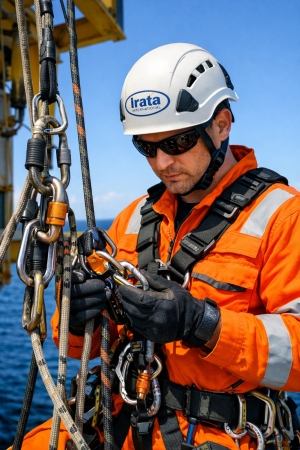
The offshore environment is one of the most demanding workplaces on the planet. Operating on oil rigs, gas platforms, and wind turbines requires a combination of technical skill and extreme safety awareness. In these remote locations, traditional access methods like scaffolding are often impractical due to space constraints, structural complexity, and the sheer height of the installations.
Rope access has become the primary solution for maintenance, inspection, and repair at sea. However, the high-stakes nature of this work means that training and certification are not merely optional extras: they are the foundation of operational integrity. For any organisation involved in construction labour supply uk, ensuring personnel hold valid IRATA (Industrial Rope Access Trade Association) certification is a non-negotiable requirement.
The Origins of IRATA in the Offshore Sector
IRATA was formed in the late 1980s specifically to address the challenges of the offshore oil and gas industry. Major operators needed a way to perform essential maintenance without the downtime and costs associated with heavy access equipment.
Rope access provided a versatile and efficient alternative, but it required a unified safety standard to manage the inherent risks. Today, IRATA is the global gold standard for rope access safety. Its protocols are adopted by international oil and gas majors, ensuring that every technician on a platform operates under the same rigorous safety framework.
Why IRATA is the Industry Standard
IRATA certification is more than just a certificate of attendance. It represents a comprehensive system of training, assessment, and operational auditing. The system is designed to eliminate human error and ensure that rescue procedures are always in place before work begins.
Rigorous Training and Assessment
- Independent Assessment: Unlike many other certifications, IRATA candidates are assessed by an independent examiner who was not involved in their training. This ensures unbiased verification of competence.
- Physical and Medical Fitness: Candidates must demonstrate physical suitability and pass medical screenings before undergoing training.
- Mandatory Progression: Technicians cannot skip levels. They must log thousands of hours of experience and wait for specific time periods before progressing to advanced supervisory roles.
Global Reciprocity and Compliance
- Uniform Standards: Whether a project is in the North Sea or the Gulf of Mexico, IRATA standards remain consistent.
- Regulatory Alignment: IRATA systems align with UK Health and Safety Executive (HSE) regulations, providing a legal safety net for companies providing site labour hire solutions.

The Three Tiers of IRATA Certification
The IRATA hierarchy ensures that every team has a balanced mix of skills and a high level of oversight. Understanding these levels is crucial for effective construction labour supply uk and ensuring the right personnel are deployed for specific offshore tasks.
Level 1: The Rope Access Technician
A Level 1 technician is capable of performing a wide range of rope access tasks under the direct supervision of an IRATA Level 3. Their training includes:
- Standard rope manoeuvres (ascending, descending, changeovers).
- Inspection of their own personal equipment.
- Assisting in simple rescue procedures.
Level 2: The Experienced Technician
Level 2 technicians are the workhorses of the industry. They possess advanced rigging and rescue skills and can handle more complex tasks, including:
- Hauling systems and tensioned lines.
- Complex rescue scenarios in difficult environments.
- Detailed knowledge of legislation and safety requirements.
Level 3: The Safety Supervisor
The Level 3 supervisor is the most critical role on any offshore project. Every rope access team must be overseen by a Level 3. Their responsibilities include:
- The overall safety of the rope access team.
- Drafting detailed Risk Assessments and Method Statements (RAMS).
- Executing complex rescue plans in the event of an emergency.
- Verifying the logbooks of junior technicians to ensure accurate record-keeping.
Safety Frameworks in Remote Environments
The offshore sector is uniquely hazardous because help is often hours, if not days, away. If an accident occurs on a platform in the middle of the North Sea, the team on-site must be self-sufficient.
Emergency Planning and Rescue
IRATA protocols mandate that a rescue plan must be in place for every single task. This "self-rescue" capability means that if a technician becomes incapacitated on the ropes, their colleagues are trained to reach them, stabilize them, and lower them to safety within minutes. This level of preparedness is why IRATA has maintained an industry-leading safety record for decades.
Equipment Specification
Offshore environments are highly corrosive. IRATA technicians are trained to identify signs of degradation in ropes, carabiners, and harnesses that would be invisible to an untrained eye. Regular equipment inspections are a mandatory part of the daily routine on any offshore installation.
The Role of Alpha Jobs in Specialised Labour Supply
At Alpha Jobs, we understand that providing site labour hire solutions for the offshore sector requires more than just a database of names. It requires a commitment to vetting and quality management.
Our recruitment processes are designed to ensure that every technician we supply holds the necessary IRATA credentials and has the specific offshore experience required for the job. Whether you are looking for electricians in Liverpool or specialised trades in London, the standard of vetting remains the same.
Quality Management and Accreditation
We maintain strict adherence to international standards to ensure the safety of the projects we support.
- ISO 9001:2015: Our certification demonstrates a commitment to quality management and continuous improvement.
- Alcumus SafeContractor: We are vetted for our health and safety practices, ensuring we meet the requirements of top-tier offshore and construction clients.
- TICA Membership: For projects involving thermal insulation, our TICA accreditation ensures that we supply personnel who understand the complexities of industrial insulation in hazardous zones.
Specialised Work Qualifications
Offshore rope access technicians rarely just "climb." They are usually skilled tradespeople who use ropes to reach their work area. Common roles include:
- NDT Inspectors: Non-destructive testing to check for structural cracks in platform legs.
- Thermal Insulation Engineers: Maintaining lagging on high-pressure steam pipes.
- Painters and Blasters: Protecting steelwork from the harsh marine environment.
- Electrical and Mechanical Fitters: Performing essential repairs on platform equipment.
Supplying these dual-skilled professionals is a core part of our construction labour supply uk services. We ensure that a technician is not only IRATA certified but also holds the relevant trade qualifications, such as Thermal Insulation Engineer certificates or electrical time-served credentials.
Accountability and Logbook Verification
One of the unique aspects of IRATA is the logbook system. Every technician must maintain a detailed log of every hour spent on ropes, which must be signed off by an IRATA Level 3 supervisor.
When vetting candidates for site labour hire solutions, we verify these logbooks. This prevents "certification drift," where a technician may hold a valid ticket but hasn't actually been on ropes for several years. Re-certification is required every three years, involving another full week of training and an independent assessment. This ensures that skills stay sharp and safety knowledge remains current.
The Consequences of Non-Compliance
Choosing non-certified or poorly vetted labour for offshore projects carries immense risks:
- Safety Hazards: Lack of rescue knowledge can turn a minor incident into a fatality.
- Legal Liability: Failing to meet industry-standard certifications can lead to massive fines and the suspension of operating licences.
- Operational Downtime: If a technician is found to be unqualified during a site audit, the entire project can be halted immediately.
- Reputational Damage: Major oil and gas companies will not work with contractors who take shortcuts with safety.
Conclusion: A Commitment to Excellence
In the offshore world, there is no room for compromise. IRATA certification is the bedrock of safety for rope access, providing a clear framework for training, supervision, and emergency response.
As a leader in recruitment and staffing, Alpha Jobs is dedicated to supporting the offshore and construction sectors with high-calibre, fully vetted personnel. By prioritizing IRATA standards and maintaining our own rigorous internal accreditations, we help our clients maintain safety at sea and project efficiency on land.
For more information on our recruitment services, visit Alpha Jobs.
Commercial Scaffolding in the UK

Why Vetted Teams are the Foundation of Every Build | Scaffolding Recruitment UK
![[HERO] Commercial Scaffolding in the UK: Why Vetted Teams are the Foundation of Every Build](https://cdn.marblism.com/MwDoZ2wRTJq.webp)
Commercial scaffolding in the UK is a high-stakes discipline. Unlike residential towers or small-scale maintenance, commercial projects involve complex structures, high-traffic environments, and rigorous legal frameworks. The stability of the entire build literally rests on the competence of the scaffolding crew — and on the reliability of your Scaffolding Recruitment UK partner.
In an industry where safety is the absolute priority, the quality of your labour supply is not a variable you can afford to overlook. Ensuring that every operative on-site is fully vetted and qualified is the only way to mitigate risk and maintain project momentum. This is the core standard we apply across Scaffolding Recruitment UK.
The Critical Nature of UK Commercial Scaffolding
Commercial scaffolding is a safety-critical trade. These structures support hundreds of workers, heavy machinery, and significant material loads. In urban environments, such as London, Manchester, or Birmingham, scaffolding often overhangs public highways, adding a layer of public liability that requires expert management.

Complexity and Scale
Commercial builds often require bespoke scaffold designs. From cantilevered platforms to suspended scaffolds and heavy-duty loading bays, the technical requirements go far beyond standard independent scaffolds. Failure to follow precise design drawings can lead to structural collapse, resulting in catastrophic financial and human costs.
High-Traffic Environments
Scaffolding on commercial sites must often be erected while the building remains operational or in close proximity to the public. This necessitates strict adherence to SG4:22 (Preventing Falls in Scaffolding Operations) and TG20:21 (Operational Guide).
Navigating the Regulatory Framework
The UK has some of the world’s strictest health and safety regulations regarding work at height. Compliance is not optional; it is a legal requirement for principal contractors and site managers.
Work at Height Regulations 2005
These regulations place a duty on employers to ensure that all work at height is properly planned, supervised, and carried out by competent persons. For scaffolding, this means only those with the correct training and experience should be involved in the assembly, alteration, or dismantling of structures.
CDM Regulations 2015
The Construction (Design and Management) Regulations 2015 require that the principal contractor verifies the competence of all subcontractors. When sourcing labour through construction trades recruitment UK channels, the burden of proof regarding worker qualification often falls on the recruitment partner.
Mandatory Inspections
Scaffolding must be inspected:
- Before it is used for the first time.
- Every seven days until it is dismantled.
- After any event likely to have affected its stability (e.g., high winds or vehicular impact).
Vetted teams understand the necessity of the "scaff-tag" system and the meticulous record-keeping required to satisfy Health and Safety Executive (HSE) inspectors.
The CISRS Qualification: The Industry Benchmark
In the UK, the Construction Industry Scaffolder’s Record Scheme (CISRS) is the recognised qualification. For over 40 years, it has been the "gold standard" for scaffolding competence.
When we provide vetted construction workers nationwide, we ensure their CISRS credentials match the requirements of the role:
- CISRS Trainee: Operatives who are new to the industry and must work under the direct supervision of a qualified scaffolder.
- CISRS Scaffolder (Blue Card): Fully qualified operatives capable of erecting, altering, and dismantling all types of basic scaffold structures.
- CISRS Advanced Scaffolder (Gold Card): Highly experienced workers qualified to handle complex, designed structures such as shoring, suspended scaffolds, and temporary roofs.
- CISRS Scaffolding Supervisor: Personnel trained to oversee large teams and ensure site-wide compliance with safety standards.
Using unvetted labour that lacks these specific credentials puts the entire project's insurance and legal standing at risk.
The Risks of Substandard Labour
The temptation to cut costs by using unvetted or under-qualified labour is a false economy. The commercial construction sector is unforgiving when it comes to incompetence.
Financial Penalties and Fines
The HSE has the power to issue "Fees for Intervention" and substantial fines for safety breaches. If a scaffold is found to be non-compliant or was erected by someone without a valid CISRS card, the site can be shut down immediately.
Structural Failure
An incorrectly braced scaffold or a poorly secured tie can lead to structural failure. In a commercial setting, this often involves damage to neighbouring properties or injury to the public. The legal repercussions for directors in these instances can include criminal charges.
Project Delays
Vetted teams work faster and more accurately. Unvetted labour often results in "re-work": where scaffolds must be dismantled and re-erected to meet safety standards: causing significant delays to follow-on trades like bricklayers, cladding installers, and steel erectors.
Alpha Jobs: 18 Years of Specialised Recruitment
Alpha Jobs has spent 18 years refining the process of Scaffolding Recruitment UK and construction trades recruitment UK. We understand that scaffolding isn't just another trade; it’s the infrastructure that allows every other trade to function safely.
Our approach to providing site labour hire solutions is built on rigorous verification. We don't just check for a valid card; we verify work history, references, and the specific technical experience required for commercial-grade projects.
Why Contractors Partner With Us:
- Expert Vetting: We ensure all scaffolding operatives hold the relevant CISRS cards and up-to-date health and safety testing.
- Nationwide Reach: Whether you need a team for a high-rise in London or a commercial refurb in Glasgow, we provide vetted construction workers nationwide through our Scaffolding Recruitment UK network.
- Specialised Trades: We understand the nuances between a tube-and-fitting specialist and a system scaffolding expert (e.g., Layher or Cuplok).
- Compliance First: Our internal processes are aligned with NASC (National Access & Scaffolding Confederation) guidance.
Comprehensive Site Labour Hire Solutions
While we specialise in scaffolding, our expertise extends across the entire construction spectrum. Commercial projects require a synchronised workforce where every operative understands the site’s safety culture.
We provide labour across various sectors to ensure your project stays on track:
- Specialist Trades: From Steel Erectors to Thermal Insulation Engineers.
- Plant Operators: CPCS Dumper Drivers and Excavator Operators.
- Supervision: Site Managers and Foremen who understand the complexities of commercial scaffolding oversight.
The Importance of NASC Guidance (TG20 and SG4)
For any commercial scaffold project, adherence to NASC (National Access & Scaffolding Confederation) guidance is the benchmark for safety.
- TG20:21: This provides the definitive guide for standard scaffolds. It includes the use of the TG20 e-guide to produce compliance certificates. Vetted teams are proficient in using these tools to ensure every structure is "fit for purpose" without needing a bespoke engineer's drawing for every single lift.
- SG4:22: This is the industry standard for preventing falls during scaffolding operations. Vetted operatives are trained in "advanced guardrail" techniques and the correct use of harnesses, ensuring they remain protected at all times.
At Alpha Jobs, we prioritise candidates who demonstrate a deep understanding of these standards, ensuring your site remains a safe environment for all.
Securing Your Scaffolding Workforce
The demand for high-quality scaffolding labour in the UK remains high. As commercial construction continues to evolve with more complex architectural designs and tighter urban footprints, the need for vetted, professional teams has never been greater. Scaffolding Recruitment UK needs to be fast, compliant, and role-specific.
Don't leave the foundation of your build to chance. Partnering with a recruitment specialist that understands the technicalities of scaffolding is the most effective way to protect your project, your reputation, and your people.
Ready to source vetted labour?
- Project Managers: Contact us today to discuss your site labour hire requirements.
- Operatives: If you are a qualified Scaffolder with a valid CISRS card, register with us to access the UK's leading commercial projects.
Commercial scaffolding is complex, but your recruitment process doesn't have to be. Trust the experience of Alpha Jobs to deliver the professionals you need to reach new heights.
Why Specialist Construction Trades Recruitment UK Will Change the Way You Manage Projects

![[HERO] Why Specialist Construction Trades Recruitment UK Will Change the Way You Manage Projects](https://cdn.marblism.com/tG42PMlj9Ec.webp)
Managing a construction project in the UK today is a balancing act of tight deadlines, fluctuating budgets, and a persistent skills shortage. For project managers and site supervisors, the pressure to deliver on time and within scope is immense. Often, the weakest link in the chain isn’t the materials or the machinery: it is the labour supply.
Using a generalist recruitment agency might seem like a quick fix, but construction is a specialised field that demands specialised solutions. At Alpha Jobs, we have spent over 18 years refining our approach to construction trades recruitment. We understand that "vetted construction workers" is not just a buzzword; it is the foundation of a successful build.
The Specialist Advantage: Why Generalists Fall Short
Generalist recruitment agencies operate on volume across multiple industries, from retail to hospitality. While they may have large databases, they often lack the technical understanding required to vet a site manager or a time-served electrician effectively.
In contrast, a specialist construction trades recruitment UK partner understands the nuances of the industry. We know the difference between a standard labourer and a skilled operative with specific tickets. We understand the significance of CSCS, CPCS, and NPORS cards, and we know how to verify them instantly.
Key differences include:
- Technical Knowledge: Specialists understand project phases and which trades are needed at each stage.
- Compliance Awareness: Deep understanding of UK health and safety regulations and site-specific requirements.
- Pre-Vetted Talent Pools: Access to a network of workers whose performance history is already documented.
- Speed of Delivery: Faster turnaround because we speak the same language as your site teams.
18 Years of Sector Knowledge
Experience in construction recruitment cannot be faked. Alpha Jobs has spent nearly two decades on the front lines of UK construction staffing. This longevity has allowed us to build an extensive network of reliable tradespeople and labourers nationwide.
Our history means we have seen the industry evolve. We have navigated economic shifts, changing safety legislations, and the digitisation of site management. This depth of knowledge allows us to anticipate your needs before they become emergencies. When you partner with us, you aren't just hiring a recruiter; you are gaining a consultant who understands the "bread and butter" of the UK construction sector.
Our "Bread and Butter": Core Sectors We Serve
While we handle complex roles, our reputation is built on delivering high-quality, reliable labour for the core trades that keep a site moving. We focus on:
- Site Labour Hire: General and skilled labourers who are punctual and productive.
- Plant Operatives: Expertly vetted articulated dumper drivers and 360 excavators.
- Skilled Trades: Time-served carpenters, bricklayers, and steel erectors.
- M&E Specialists: Qualified electrical testers and thermal insulation engineers.
By focusing on these essential sectors, we ensure that our vetting process is laser-focused on the specific skills your project requires.
The Alpha Jobs Vetting Process: Reducing Your Risk
Risk management is a primary concern for any project manager. Hiring the wrong person can lead to site delays, safety incidents, and increased costs. Our vetting process is designed to mitigate these risks before a worker ever sets foot on your site.
- Identity and Right to Work Checks: Comprehensive verification of all legal documentation.
- Certification Verification: We check the validity of CSCS/CPCS cards and specific trade qualifications.
- Reference Checking: We speak to previous site managers to confirm reliability, work ethic, and skill levels.
- Health and Safety Compliance: Ensuring every candidate understands and adheres to standard UK site safety protocols.

How Specialised Recruitment Transforms Project Management
Integrating a specialist recruitment partner into your workflow changes the way you manage projects. It shifts the burden of labour management away from your internal team, allowing them to focus on engineering, safety, and delivery.
1. Accelerated Project Timelines
Time is money in construction. When a project is awarded, you often need boots on the ground within days. A specialist agency maintains a "ready-to-go" pool of vetted construction workers nationwide. Instead of waiting weeks for job adverts to circulate, you can scale your workforce in 24 to 48 hours.
2. Improved Resource Allocation
Your site managers are highly paid professionals. Their time is best spent overseeing the build, not interviewing labourers or chasing references. By outsourcing recruitment to Alpha Jobs, you reclaim those hours. We handle the admin, the screening, and the payroll, delivering a "plug-and-play" workforce directly to your site.
3. Enhanced Workforce Quality
A specialist recruiter doesn't just look for "available" workers; they look for the "right" workers. Because we understand the trades, we can match the specific skill set of a thermal insulation engineer's mate to the exact requirements of your contract. This leads to higher quality work and fewer instances of remedial repairs.
Compliance and Quality Standards
In the UK construction industry, compliance is non-negotiable. At Alpha Jobs, we don't just promise quality; we prove it through our accreditations and memberships.
Our ISO 9001:2015 Certification is a testament to our commitment to quality management. It ensures that our internal processes: from candidate screening to client communication: meet internationally recognised standards. This level of rigour is rare in generalist agencies but standard at Alpha Jobs.
Furthermore, our membership in organisations like TICA (Thermal Insulation Contractors Association) demonstrates our specific expertise in niche sectors.
Risk Mitigation and Health and Safety
Every person we send to a site represents a potential risk if they are not properly vetted. We take this responsibility seriously. Our alignment with industry-leading standards like Alcumus ensures that we are always up to date with the latest workplace practices and risk management strategies.
If a temporary worker does not meet your expectations, our specialist approach allows for rapid replacement. Because we have a deep bench of talent, we can swap personnel with minimal disruption to your project schedule. This flexibility is vital for maintaining momentum on site.
Scalability and Flexibility
The construction industry is cyclical and project-based. Your labour needs in January may be vastly different from your needs in June. Specialist recruitment allows you to:
- Scale up rapidly for new project phases.
- Scale down efficiently as projects reach completion.
- Access niche skills for short-term tasks without the overhead of permanent employment.
This "on-demand" labour model is only effective if the workers provided are of a high standard. That is where our 18 years of experience becomes your competitive advantage.
Conclusion: Partnering for Success
Choosing a recruitment partner is a strategic decision. While price is always a factor, the hidden costs of poor-quality labour: delays, accidents, and management stress: far outweigh the initial savings of a cheaper, generalist agency.
By choosing Alpha Jobs for your specialist construction trades recruitment in the UK, you are investing in project stability. Our deep industry knowledge, rigorous vetting, and commitment to quality mean you can manage your projects with confidence, knowing your labour supply is in expert hands.
Whether you need a single operative or a full site team, we have the experience and the network to deliver. Explore our current job listings or contact us today to discuss your project requirements. Let us handle the people, so you can focus on the build.